

Turn Signups Into Revenue: The New AI Onboarding Playbook
PLG meets AI is the shift from users learning your product to an agentic product that acts for them. Here is the activation playbook that makes complex self-serve actually convert, and the Mixmax numbers behind it.
Workshop recap. July 30, 2026, hosted by ProductLed. With Wes Bush (Founder & CEO, ProductLed), Mickey Alon (Co-Founder & CEO, Foldspace), and Jakub Tutaj (Growth, Mixmax).
Start with what PLG actually did. It solved access. Anyone can sign up, the salesperson is no longer the gatekeeper, and demand qualifies itself through usage. For simple tools, that was enough. But PLG removed the rep and kept the complexity, then handed that complexity to the user. So signups stall at the one place that matters to your number: the outcome. AI-First Growth is the superset that fixes it. Keep the self-serve motion, and add the agentic execution that finally makes a complex product self-serve for real.
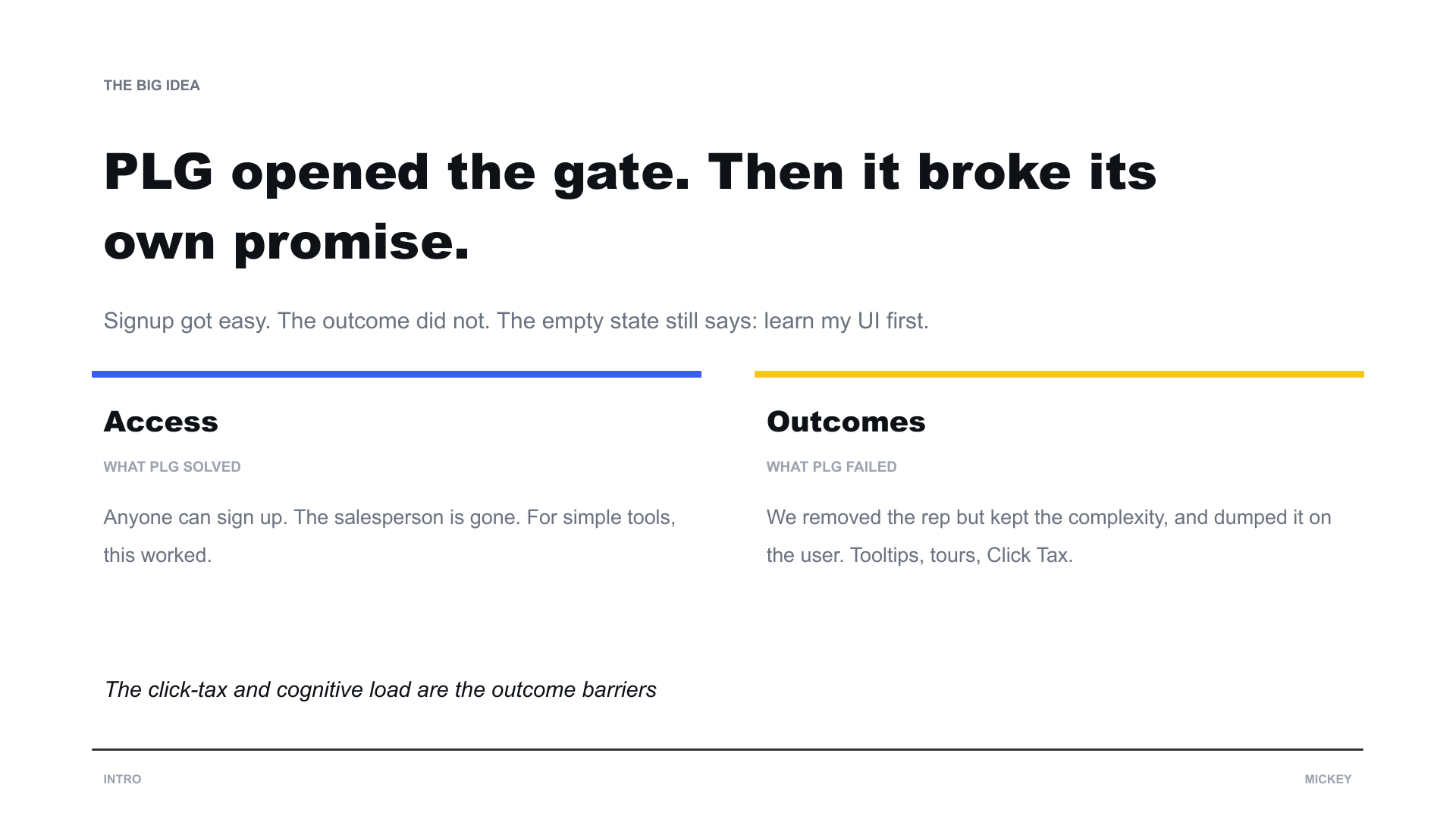
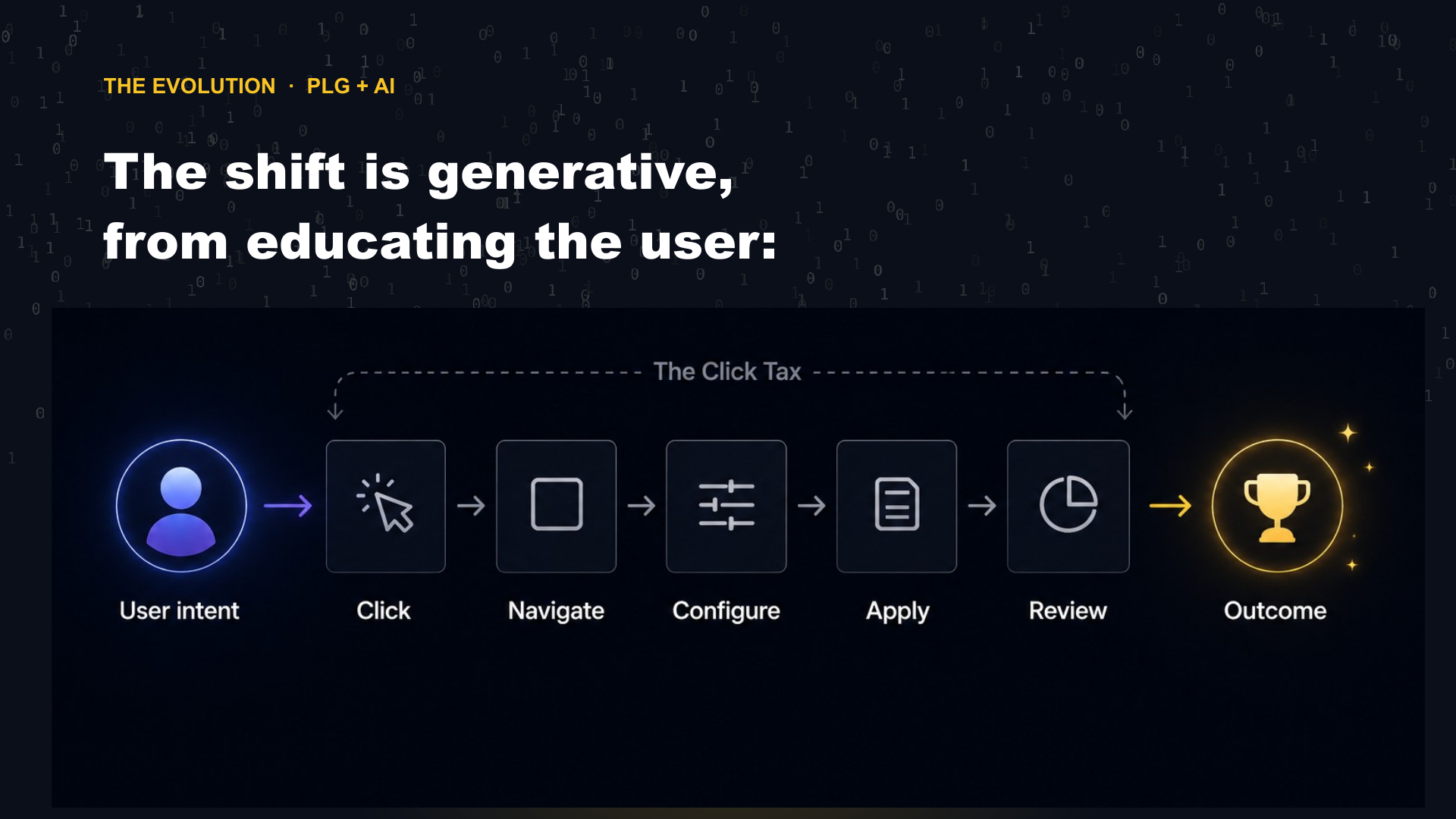
The thing eating your activation rate is what Mickey calls the click tax. You sign up, and the product hands you homework. Every screen, filter, and setup step between "what I came to do" and "the result I wanted" is a hidden conversion cost. You have watched it happen: the seven-step setup that craters completion to the teens. No copy change on that flow closes the gap, because the gap is not your flow versus a better flow. It is your flow versus a fundamentally different interaction model.
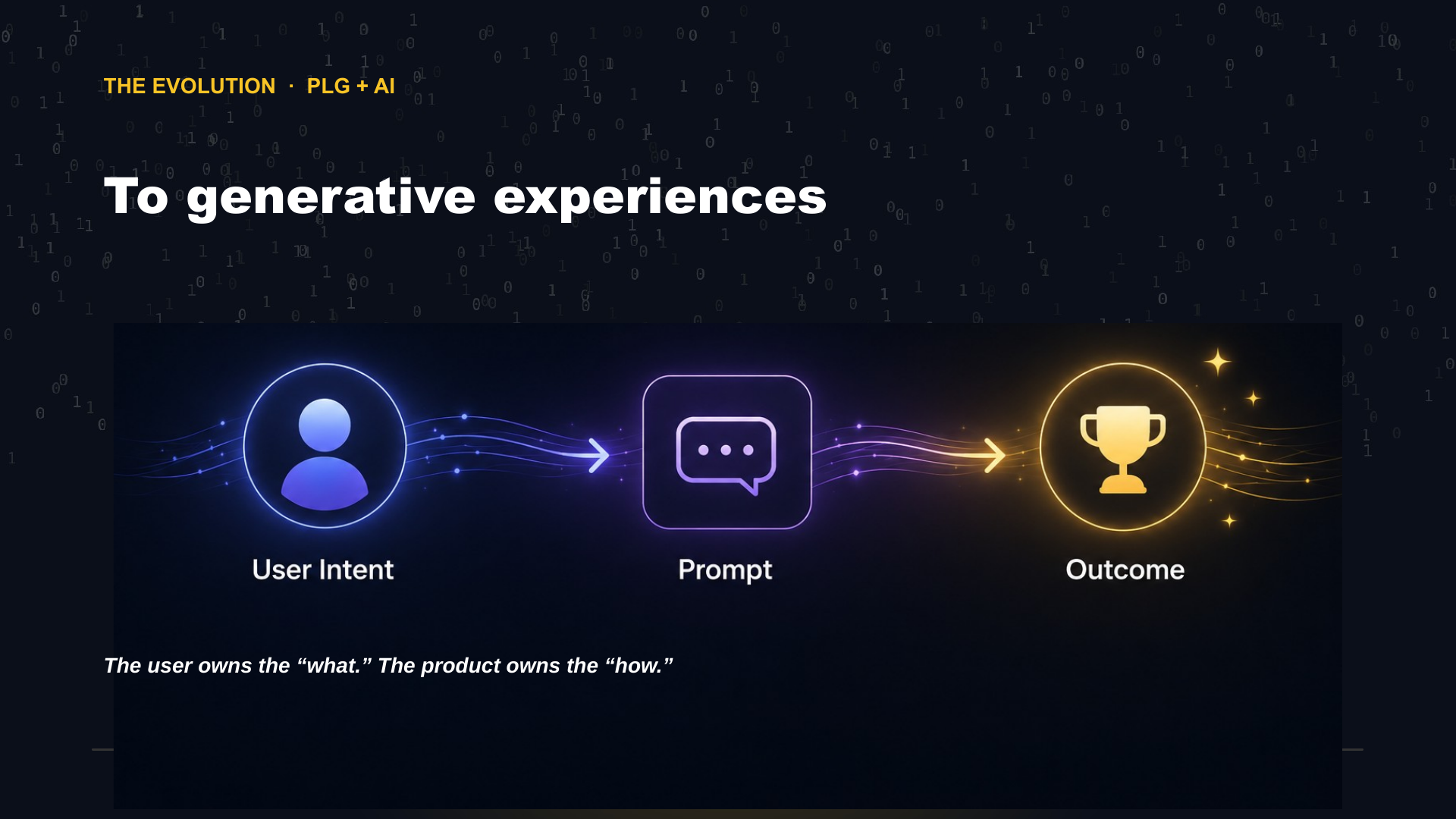
AI-First Growth collapses that path. The user says what they want, the agent runs the steps, and the outcome shows up. Thirty clicks become one prompt, and the first real outcome lands in under a minute. The user owns the what. The product owns the how. Same product, radically different first run, which is exactly the lever that moves activation.
The play has two moves you can ship this week. First, context before content: your onboarding questions stop being a form-fill and become the brief the agent acts on, who the user is, what they came to do, what good looks like. Second, launch them straight into an outcome, not another setup screen. It does not have to be perfect. Show them the result taking shape and they are hooked, because they can see value instead of a blank page. Ask for the one input that gives them ownership of it. That bit of friction is worth keeping, and it quietly filters out the users who were never going to convert.
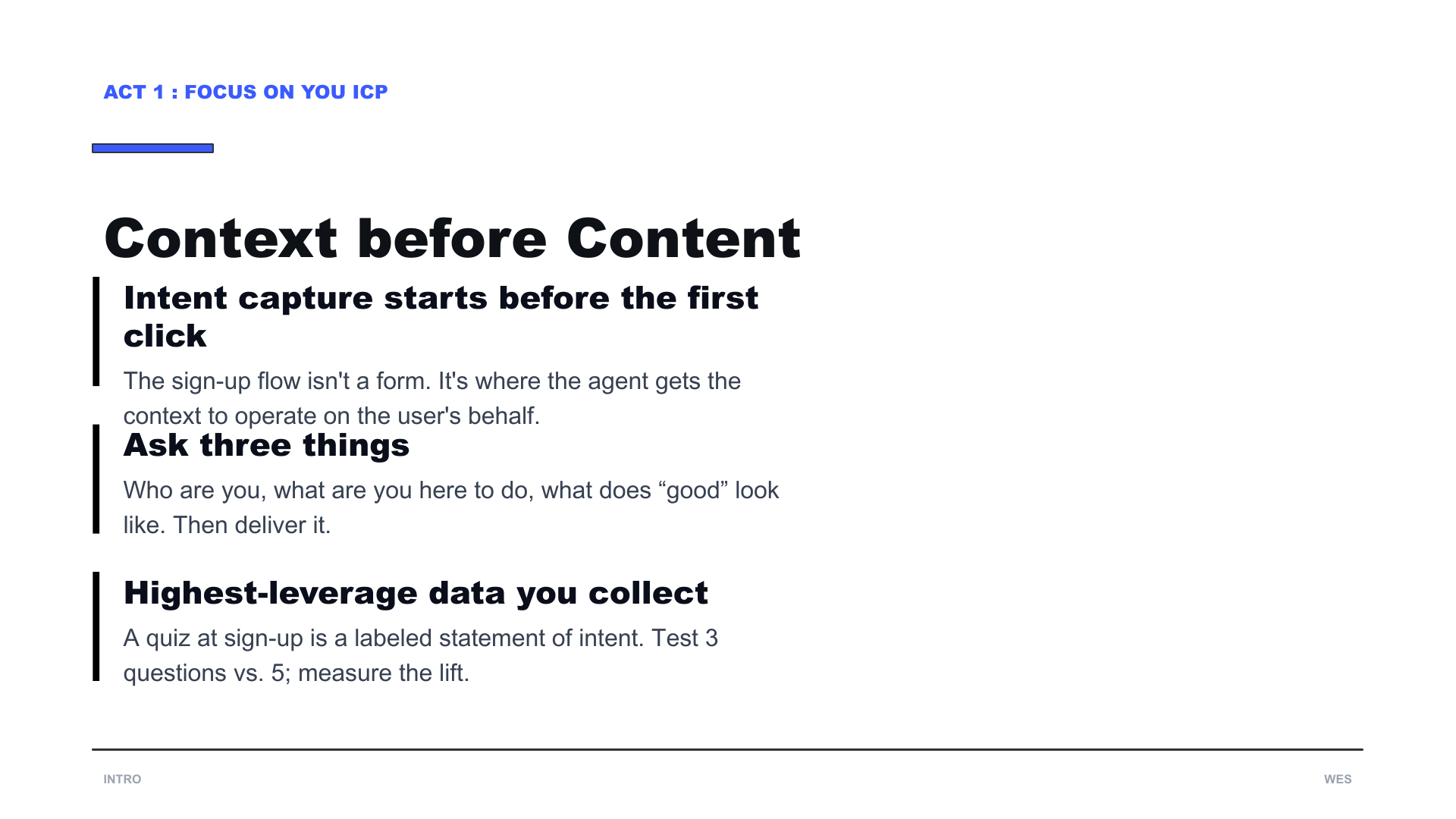
Then run it like a growth experiment, because that is what it is. Name your setup and aha moments as a hypothesis. Validate them against conversion, the step most teams skip. At Mixmax, users who hit no key action converted at essentially zero, while users who reached the real aha moment were five to six times more likely to convert. Then reduce the time to each. Because this is a conversational layer, you launch the experiment outside your release cycle and pull it just as fast, with no eng sprint waiting on a deploy. The loop that used to take weeks takes hours.
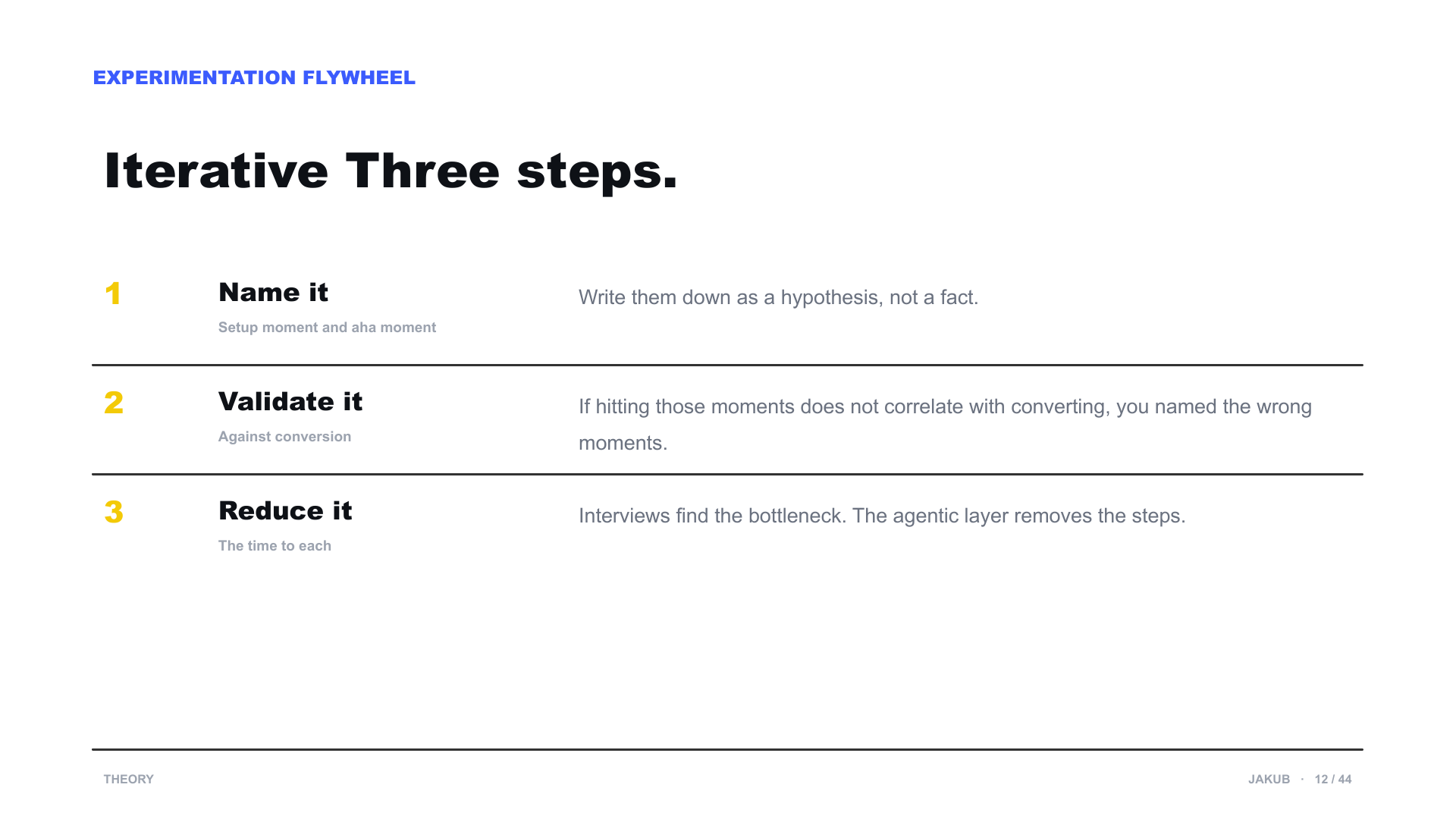
And you finally get to measure the thing you actually care about. Pendo and Amplitude tell you where users clicked. They cannot tell you what users were trying to do. Conversational Analytics, now generally available, reads it straight from the prompts: leading intent, time-to-value, resolution, and the unresolved intents, which is what users wanted right before they churned. Clicks whisper. Prompts yell. You have been optimizing the whisper.
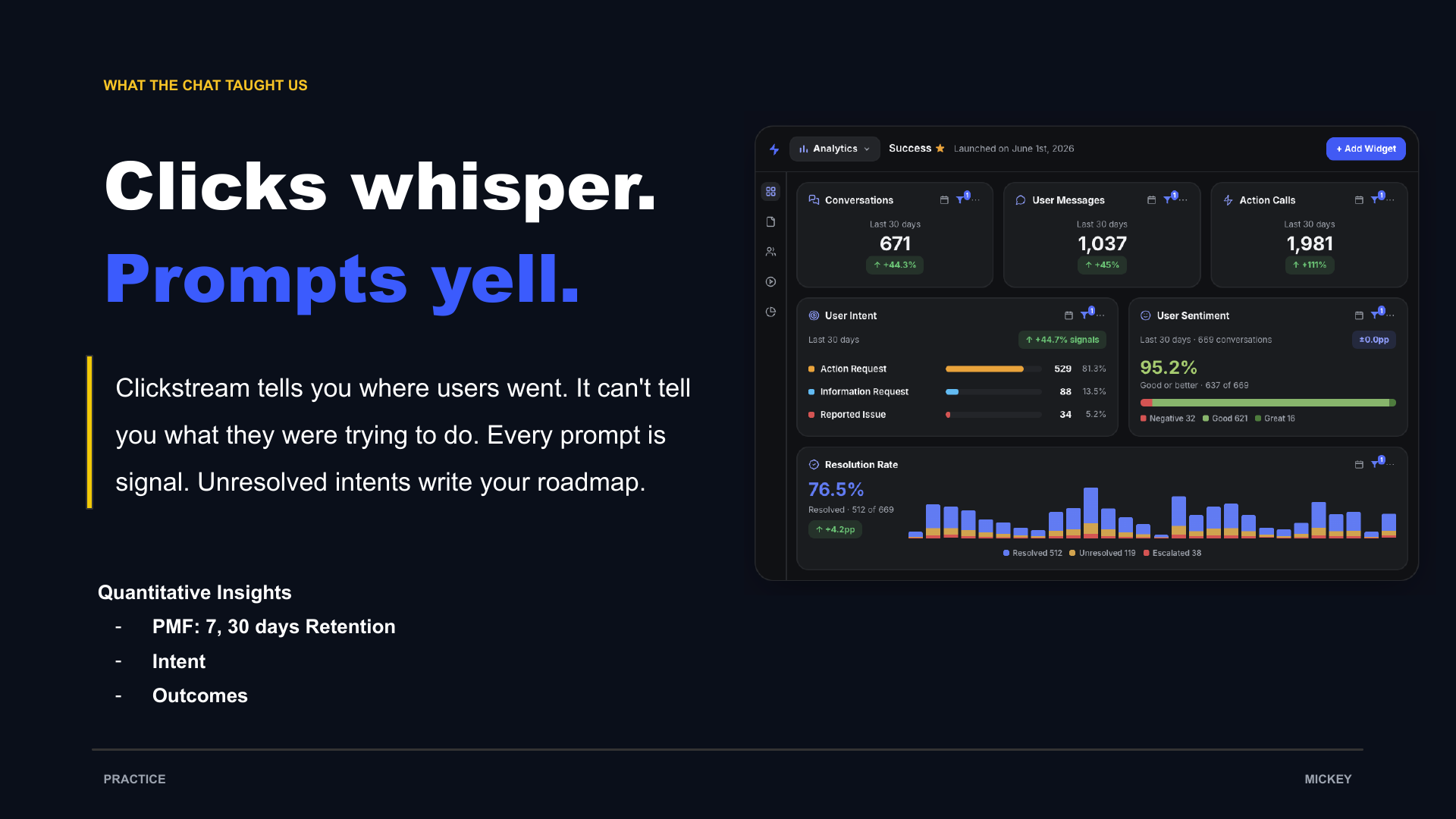
Users take to it faster than you would expect. Across Foldspace deployments, 73 to 90 percent of users tell the agent to act, not just answer a question. "Do it for me" is now the default expectation, because the general AI tools already trained your users to want it.
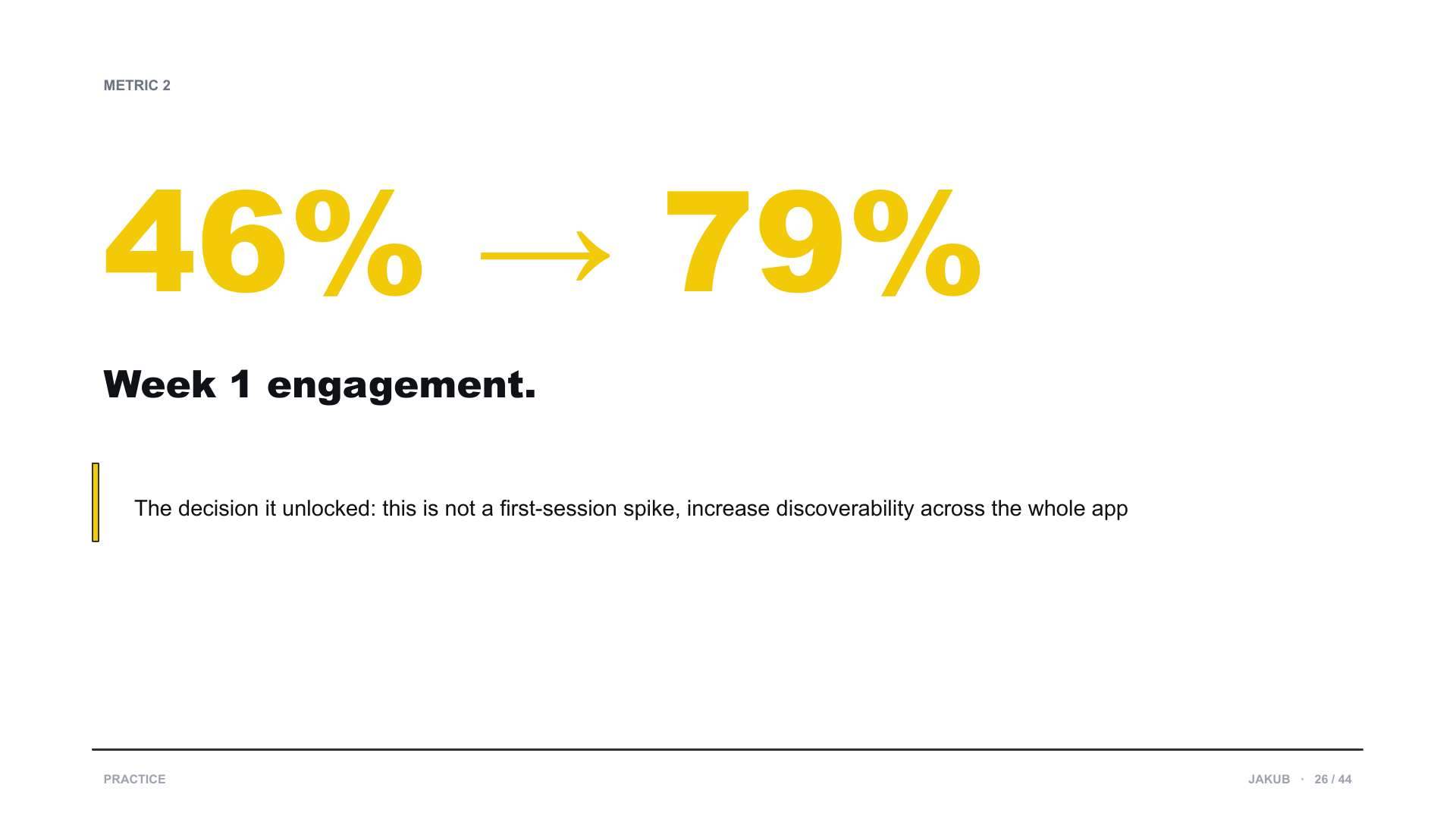
The numbers moved where it counts. Week-one engagement went from 46 to 79 percent, and it held past the first session, which told Jakub this was a real behavior change and not a launch-day spike.
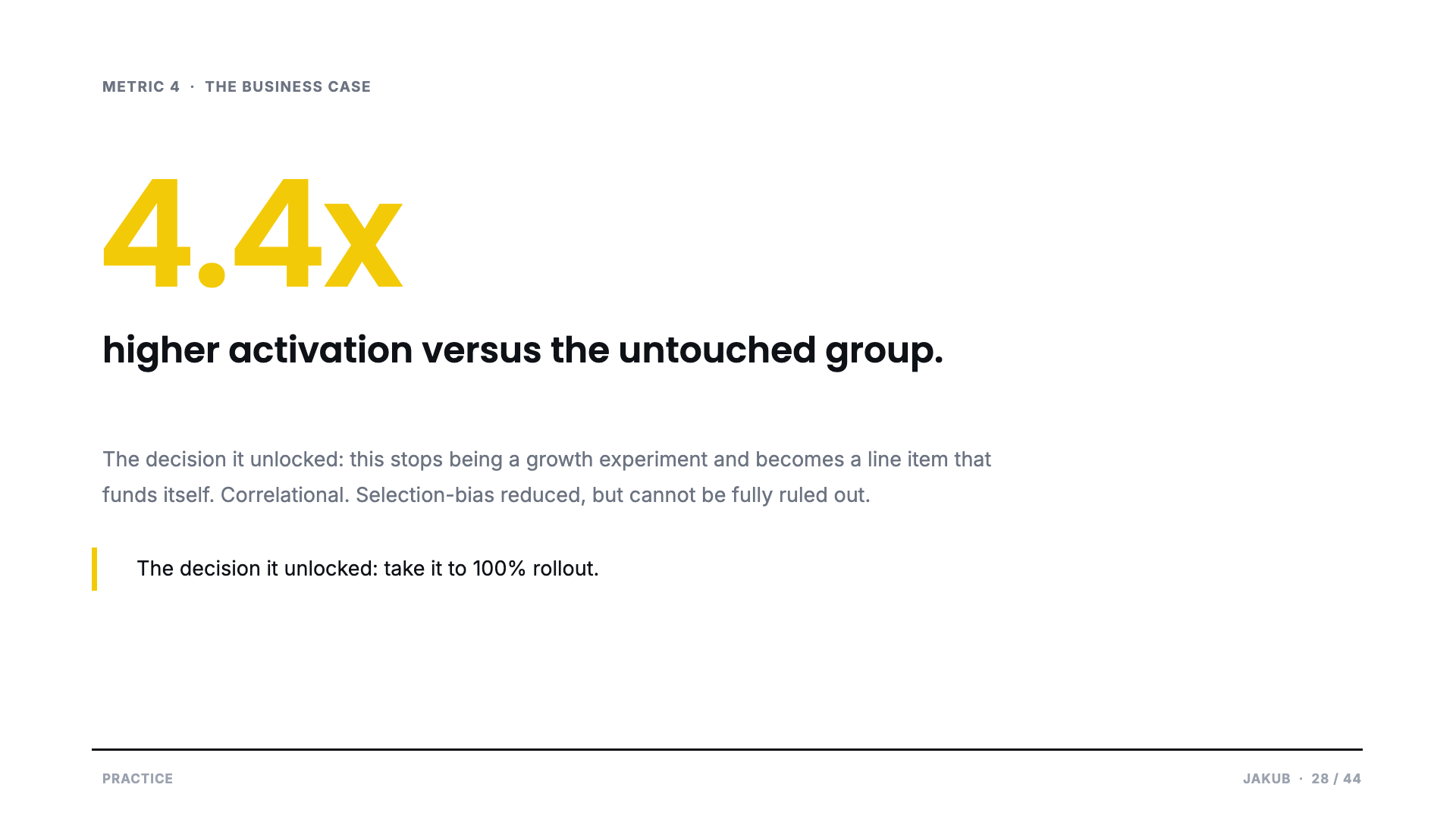
Users who engaged with the agent were 4.4x more likely to activate than those who did not, and Jakub ran three anti-bias tests against matched historical cohorts to confirm it was a real effect, not just high-intent users finding the shiny new thing.
They did not just convert more, they converted faster. Time to paid dropped from five days to 2.6. It is not that people love AI chat. The agent crosses the small frictions that derail a genuinely interested user in their first session. High intent does not get you up the mountain if the car breaks down halfway.
If you take one thing back to your funnel, make it this: collapse the distance between user intent and outcomes. You do not rebuild the product to do it. The hybrid path, the standard interface for people who want to click and the agentic path for people who want the outcome now, is how you start on Monday without ripping anything out. With the Remote plugin you can build a live experience and demo it with no codebase. Solve activation first. The teams that treat this as an experiment they turn every week, not a feature they ship once, are the ones whose activation curve actually bends this quarter.
If you want to talk about wiring an agentic experience in front of your product with no rebuild, that is what we do at Foldspace, and we are happy to walk through it: foldspace.ai.
Mickey Alon · Co-Founder & CEO, Foldspace · mickey@foldspace.ai Wes Bush · Founder & CEO, ProductLed · wes@productled.com Jakub Tutaj · Growth, Mixmax · mixmax.com