

Why "Self-Serve" Isn't Enough Anymore: The Rise of Agent-Led Growth (ALG)
 Mickey Alon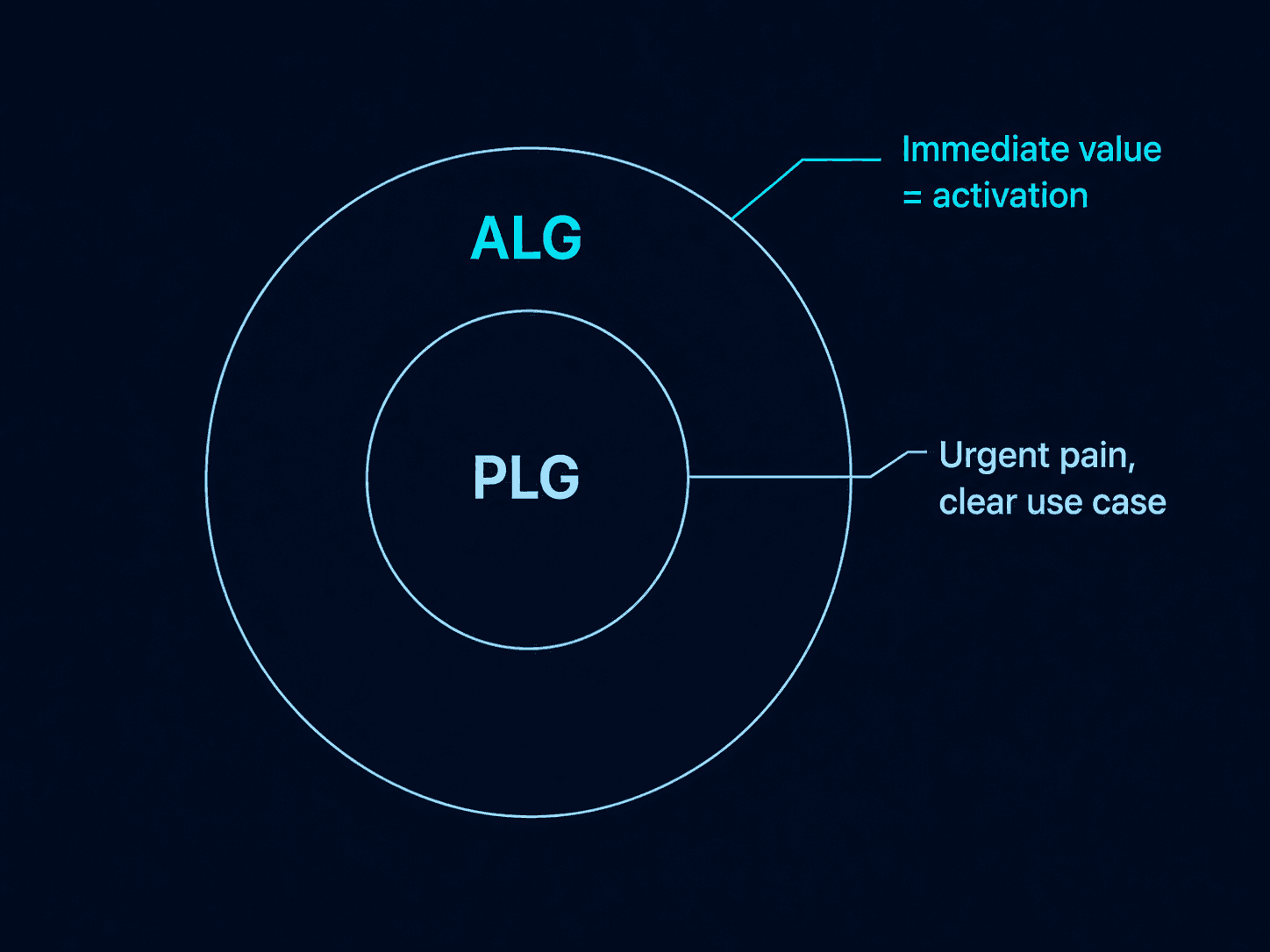
I've spent the last decade evangelizing Product-Led Growth (PLG). The promise was seductive: remove the salesperson, open the gates, and let the product sell itself.
For simple tools, it worked. But for complex B2B software, PLG hit a wall.
We solved the Access problem (anyone can sign up), but we failed the Outcomes problem (few can actually use it effectively).
The PLG Reality Check
We stopped hand-holding users with sales reps, but we didn't remove the complexity. We just dumped it onto the user.
- ❌ We gave them "tooltips" instead of solutions.
- ❌ We gave them "tours" instead of outcomes.
- ❌ We created a Click Tax that kills conversion rates.
The Big Unlock: Agent-Led Growth (ALG)
This is the missing layer that finally makes PLG work.
Agent-Led Growth (ALG) is the shift from users learning the software to the software learning the user.
- ❌ PLG asked users to "Self-Serve" (struggle alone).
- ✅ ALG allows products to "Self-Operate" (get it done).
When you add an agentic layer to your PLG motion, you stop forcing users to memorize workflows. You let them express Intent ("Fix this report") and the agent handles the Execution (clicks, filters, edits).
The Headwind in SaaS 📉
This isn't just a UX preference anymore; it is an existential risk.
On one hand, if users need to learn your UI to get value, you are now risking losing them to a competitor who is already AI-First. The tolerance for "learning curves" has hit zero.
On the other hand, this is your turnaround opportunity. By building core agents and a "Product Operator" agent, you stop competing on UI features and start competing on delivered outcomes.
Mickey Alon — Co-Founder & CEO, Foldspace AI