Make your product as easy as ChatGPT
Onboarding Tooltips Are Dead
Workshop summary, October 28, 2026. Hosted by Wes Bush (Founder, ProductLed), with Mickey Alon (Foldspace) and guest Mike Telem (Kemtai). Watch the full session above.
Your users already know how to work with AI. They say what they want and expect it done. Then they open a complex product.
In this ProductLed workshop, attendees built an agent on their own product in three steps, and Mike Telem, co-founder and Chief Business Officer at Kemtai, a Foldspace customer, showed how his team did it. Here's the short version.
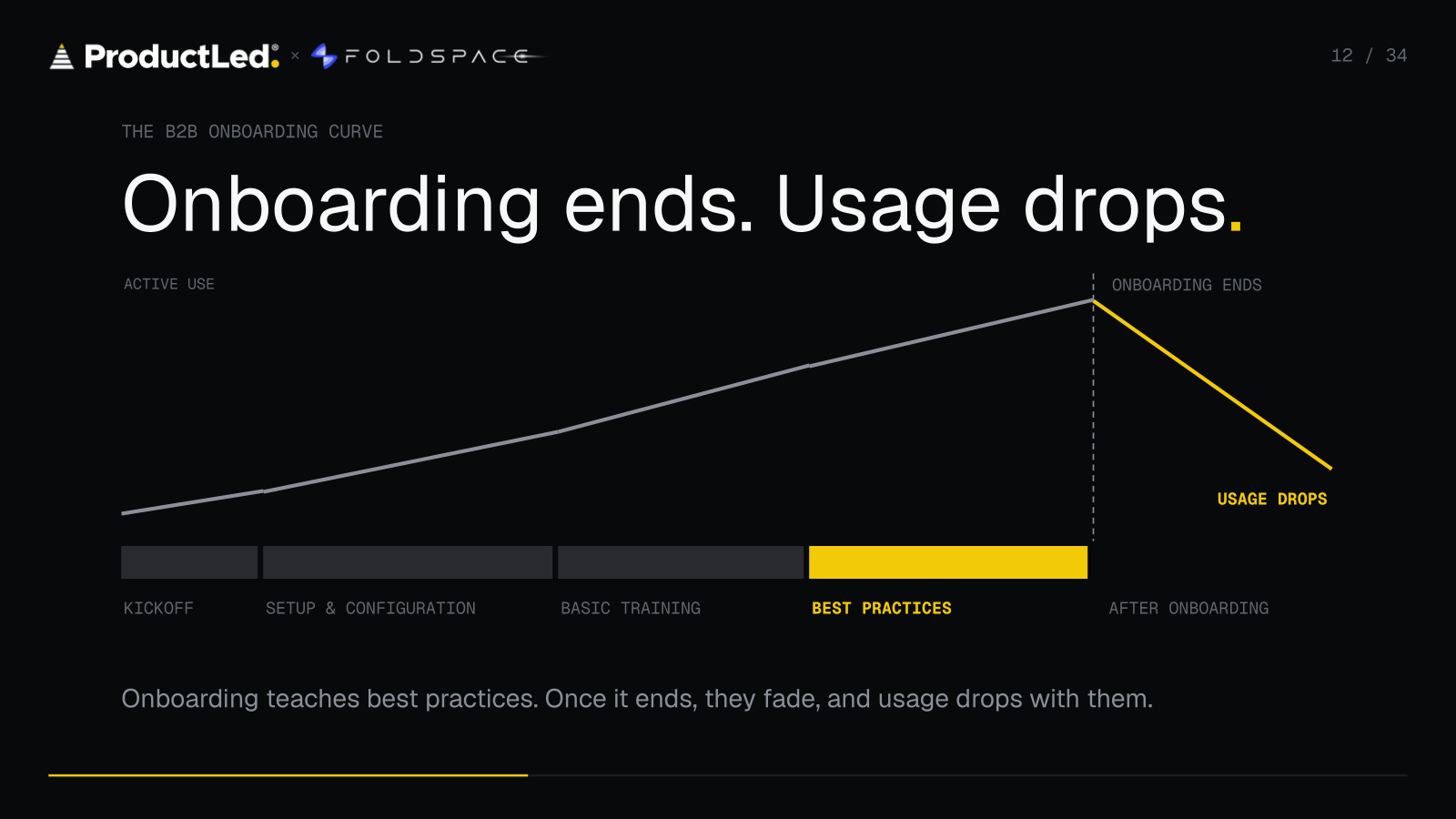
The problem: onboarding ends, usage drops
It's a pattern across B2B. Software gets complex for good reasons: more features every quarter, several personas, power users who take months to make. Usage climbs while a success team trains users. Then onboarding ends, users have to remember what they saw in training, and usage falls.
Three steps to your first agent
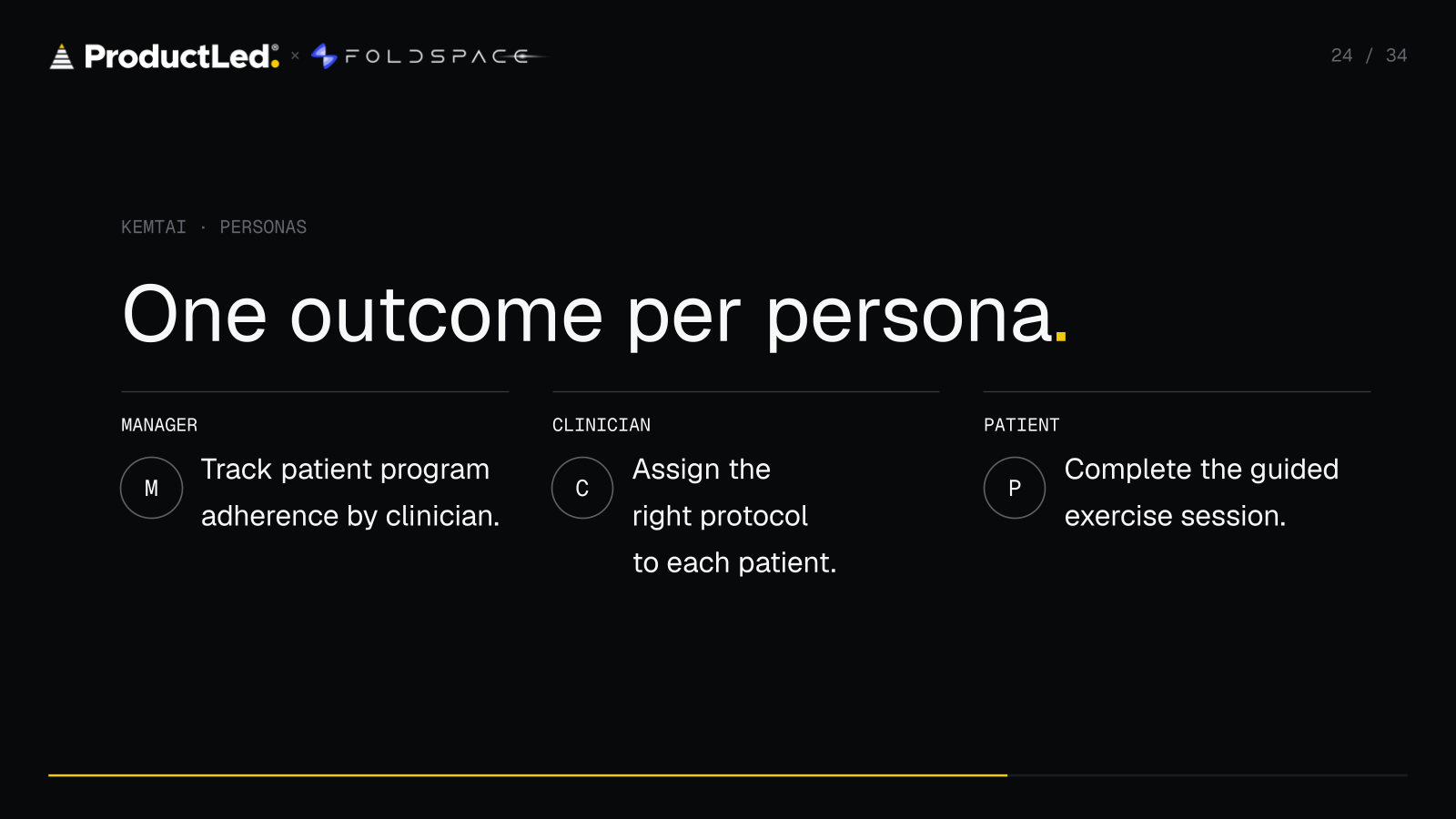
Mike walked through Kemtai, a computer vision platform for physical therapy, as the live example. It serves clinicians, patients and clinic managers, each with their own goals.
Mike Telem, Kemtai"All of those features are important, not to all of the people all of the time."
1. Find your first strike
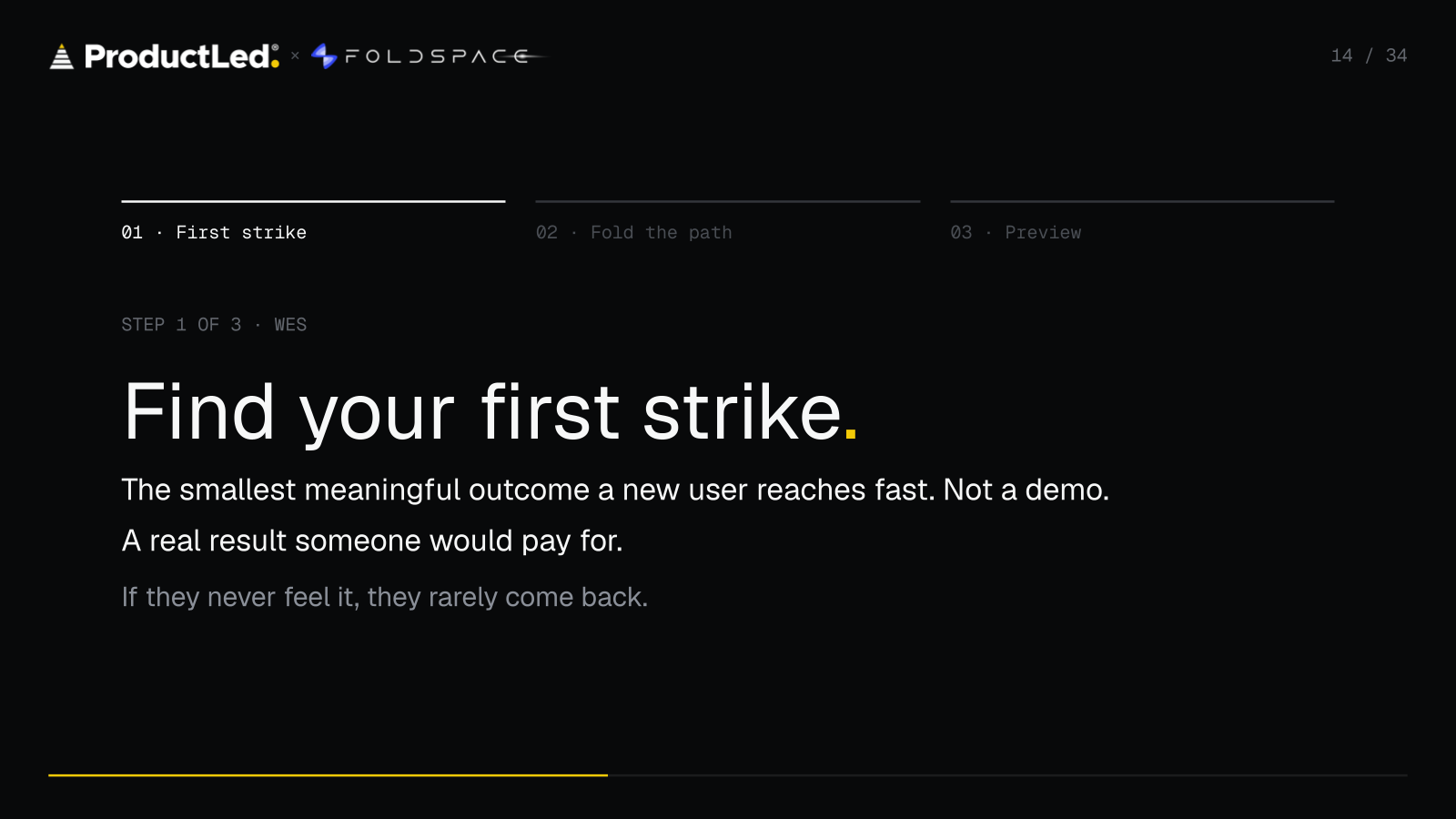
Wes Bush's term for the smallest meaningful outcome a new user reaches fast. Setup isn't it. The first strike is the result that shows why your product beats the alternatives. Decide it first, because an agent gets users somewhere faster, and you want that somewhere to be the right place. For a Kemtai clinician, it's assigning the right protocol to a patient.
2. Fold the path
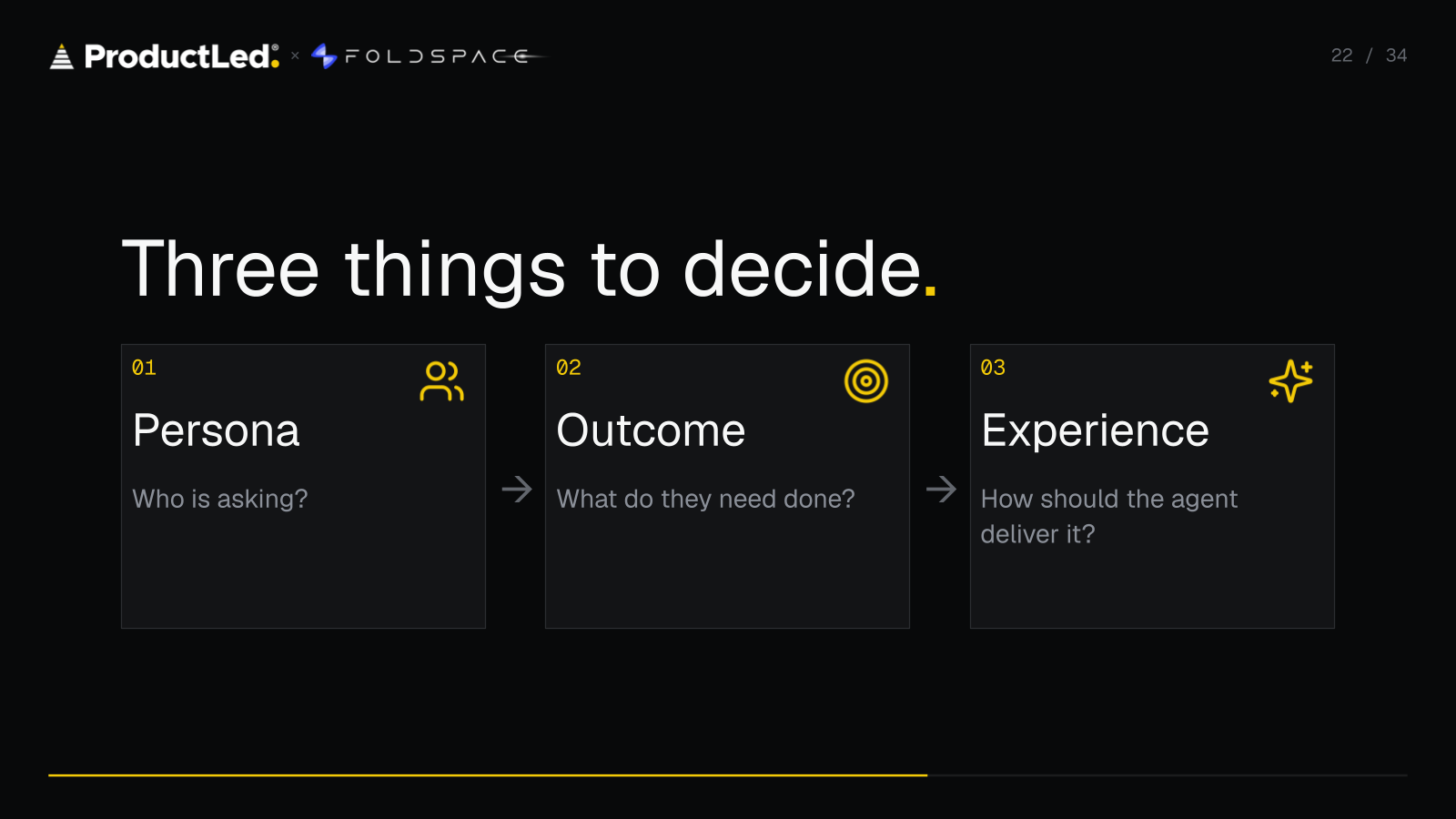
Cut everything between what the user wants and the outcome. Across Foldspace deployments, 73 to 90% of user requests ask the agent to do something, not to answer a question. So decide three things: who is asking, what they need done, and how the agent delivers it (a chart in the chat, voice, navigation, or filling it in with the user). Don't move a setup form into a chat. Have the agent do the setup.
3. Preview it
The Agent Builder, working with Claude and a Chrome browser, builds a working Product Agent on your own product in minutes, in a test browser on your machine. Nothing reaches your users and your product's code doesn't change. Going live is one snippet and your team's approval.
The demo: say it, approve it
Mike asked the agent to add a shoulder protocol to a patient. It drafted the assignment, and nothing was saved until he approved it. Switching to the manager view, one click on a starter brought up patient adherence in the conversation.
Mike Telem, Kemtai"We didn't have to tell the software too much in Foldspace what to do to get this done, and then just start tweaking it."
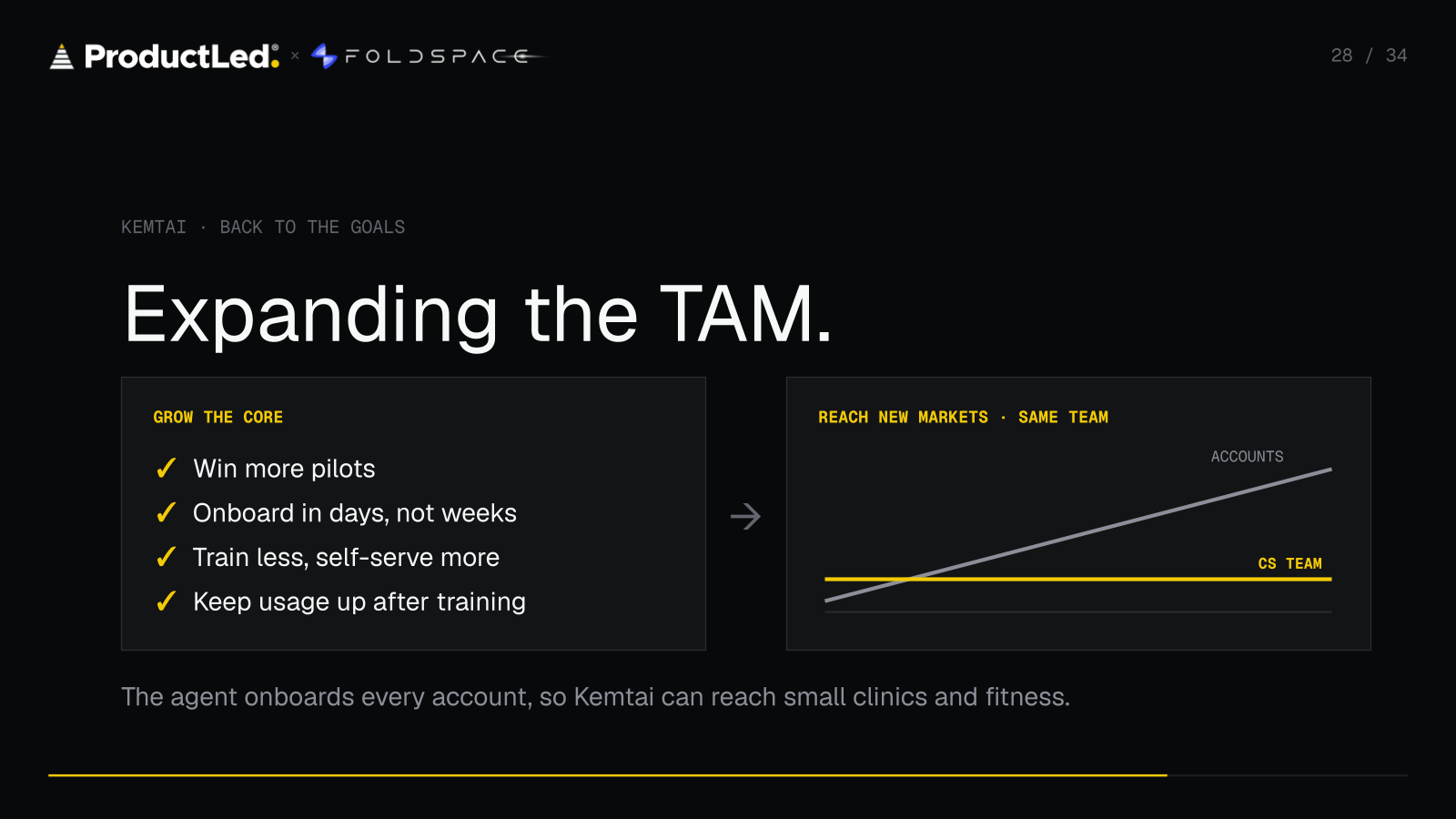
For Kemtai, the bigger prize is reach: self-serve onboarding opens markets like small clinics and fitness, where hands-on training doesn't pay.
Where onboarding is going
You become the human in the loop. Once the agent is live, Conversational Analytics, available now, shows what users asked for in their own words and what the agent couldn't do yet. Your team approves the next experience and ships it outside the release train. Onboarding stops being a project and becomes a weekly loop.
Takeaways
- Pick the first strike before you build. Make it the moment that shows why your product is better.
- Have the agent do the setup. Let the first session end in a result, not a lesson.
- Run onboarding as a loop. Every conversation tells you what to build next.
The products that win won't have the most features. They'll be the ones users can simply ask.
Build with Foldspace
Wes Bush is the Founder of ProductLed. He wrote Product-Led Growth and The Product-Led Playbook.
Mickey Alon is Co-Founder and CEO of Foldspace, co-author of Mastering Product-Led Growth, and previously co-founded Gainsight PX and Insightera. He writes about the shift from click-driven software to agentic interfaces.
Mike Telem is Co-Founder and Chief Business Officer at Kemtai, a computer vision platform for physical therapy.