

Implementing an Agentic Roadmap to Unlock Growth
 Mickey Alon
From PLG to ALG: Implementing an Agentic Roadmap to Unlock Growth
Webinar recap — March 2026
The most requested session at this year's summit was also one of the most forward-looking. Mickey Alon, CEO and co-founder of Foldspace AI, spent 20 minutes reframing how SaaS product teams should think about growth — not through better onboarding checklists or slicker UI, but through an entirely new paradigm he calls Agent-Led Growth (ALG).
Here's everything covered.
What Is Agent-Led Growth?
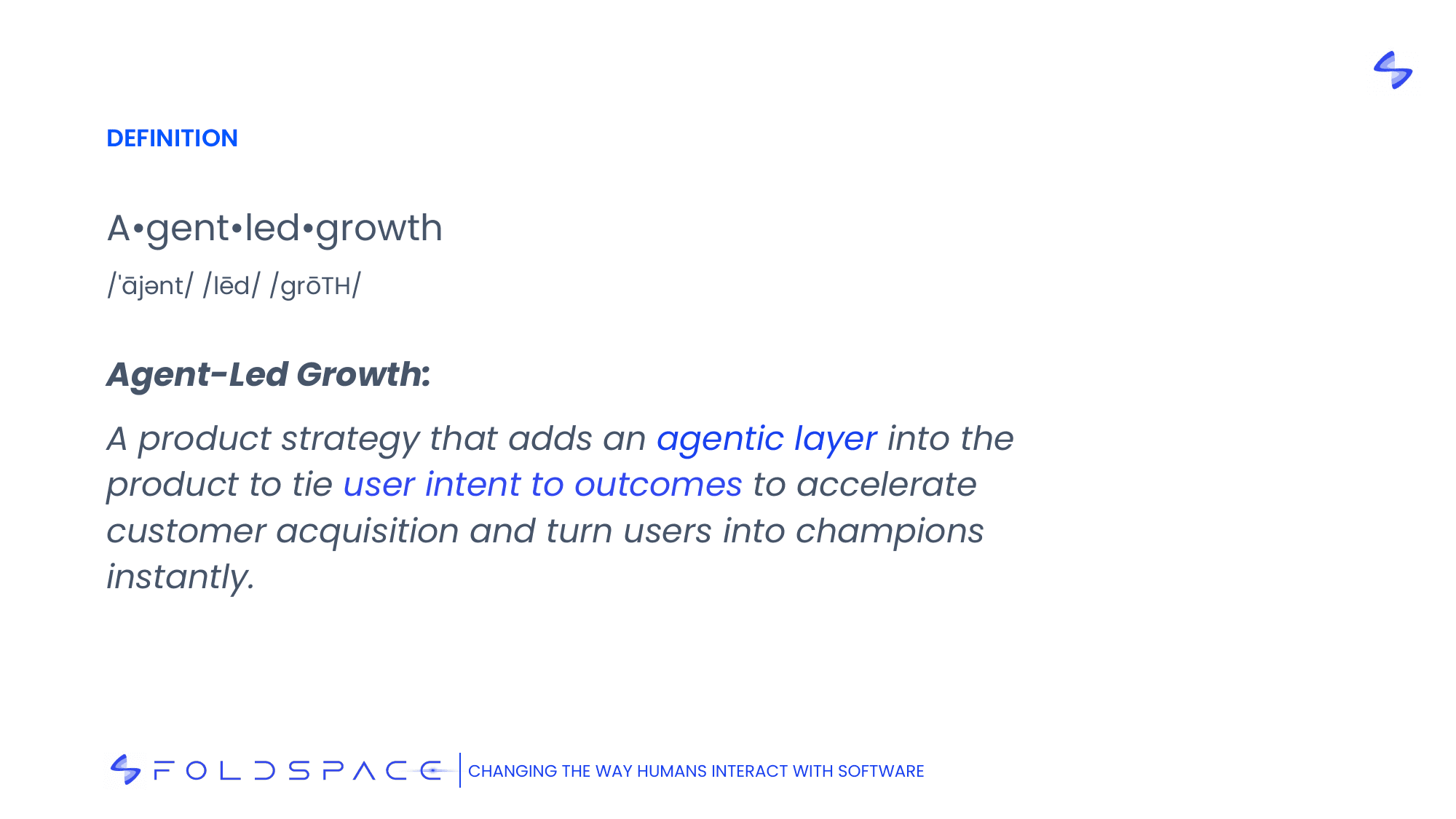
Mickey opens with a crisp definition:
Agent-Led Growth (ALG): A product strategy that adds an agentic layer into the product to tie user intent to outcomes, accelerating customer acquisition and turning users into champions instantly.
This is the natural evolution of PLG. Where PLG used the product itself as the vehicle for acquisition and retention, ALG layers powerful AI agents on top — shifting the burden of execution from the user to the product.
The core shift: the product learns the user, not the other way around.
Why "Self-Serve" Isn't Enough Anymore
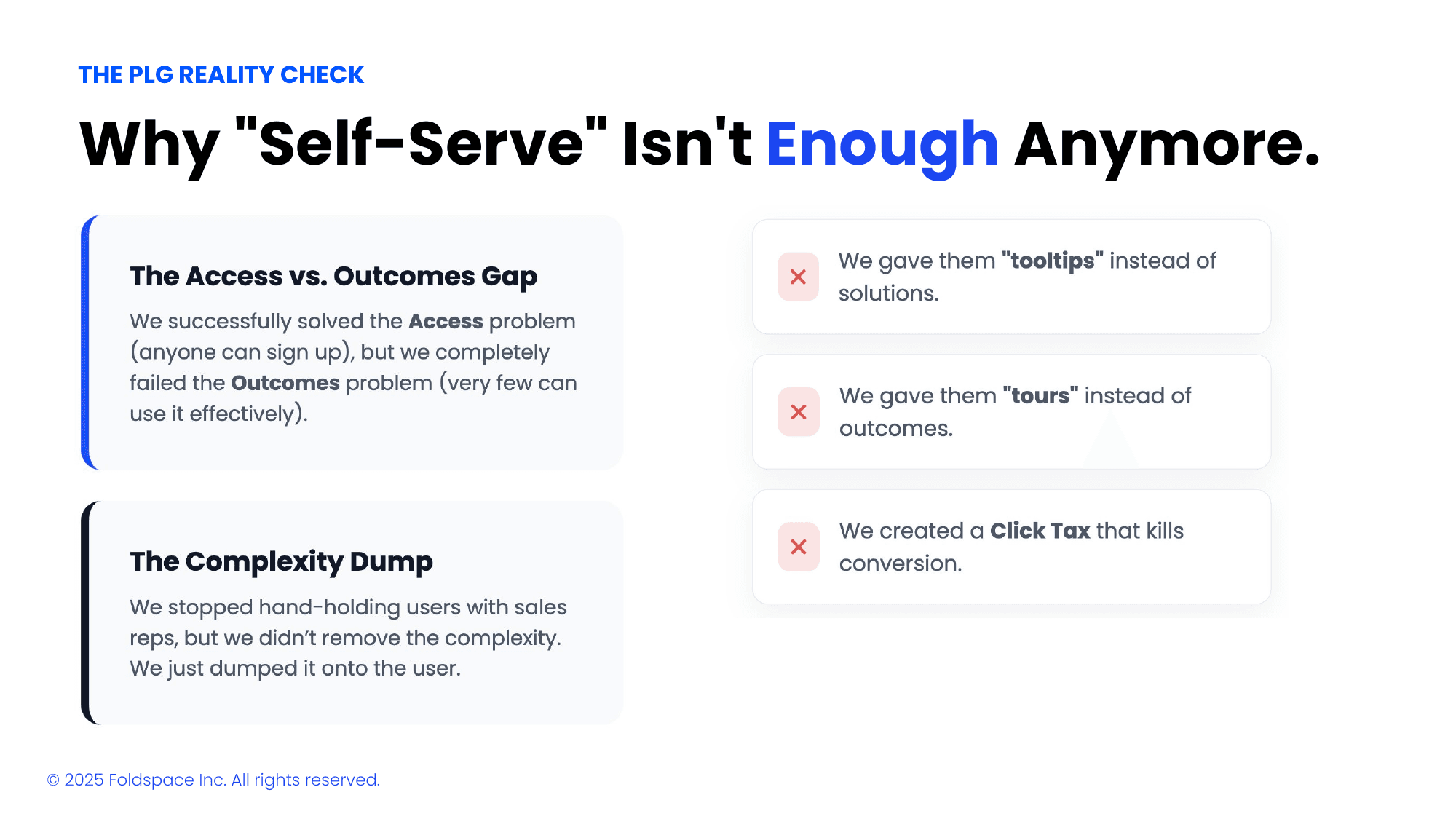
Mickey argues that the PLG playbook hit a wall, especially for complex B2B SaaS. The movement solved the access problem — anyone can sign up — but completely failed the outcomes problem.
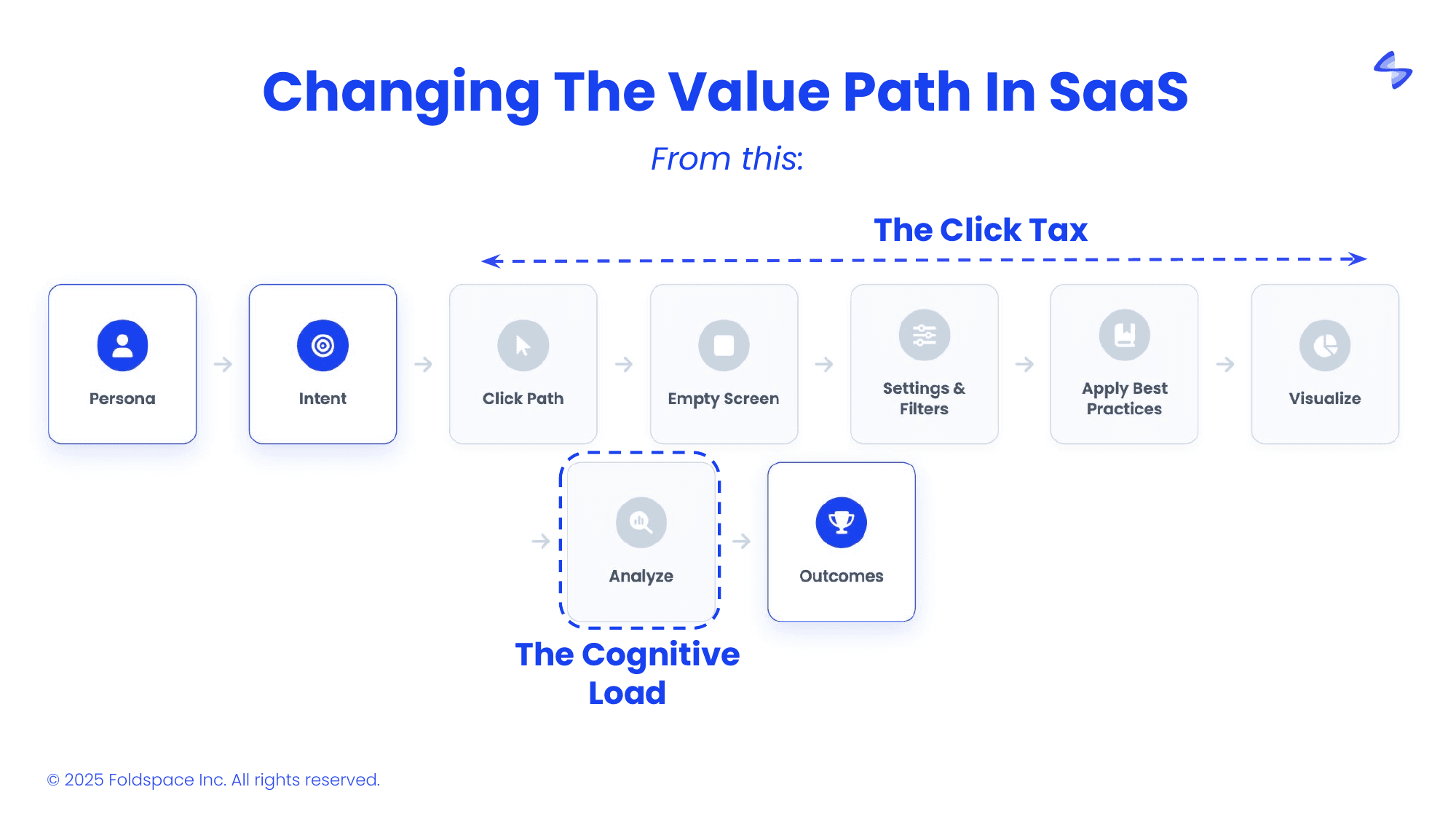
The result was what he calls the Click Tax: a hidden cost imposed on users every time they have to click through menus, configure filters, apply best practices, and navigate empty screens just to reach the value they came for.
Three symptoms of this failure:
- We gave users tooltips instead of solutions
- We gave users tours instead of outcomes
- We created a Click Tax that kills conversion
When companies stopped hand-holding users with sales reps, they didn't remove product complexity — they just dumped it onto the user.
The 5 Principles for Implementing ALG
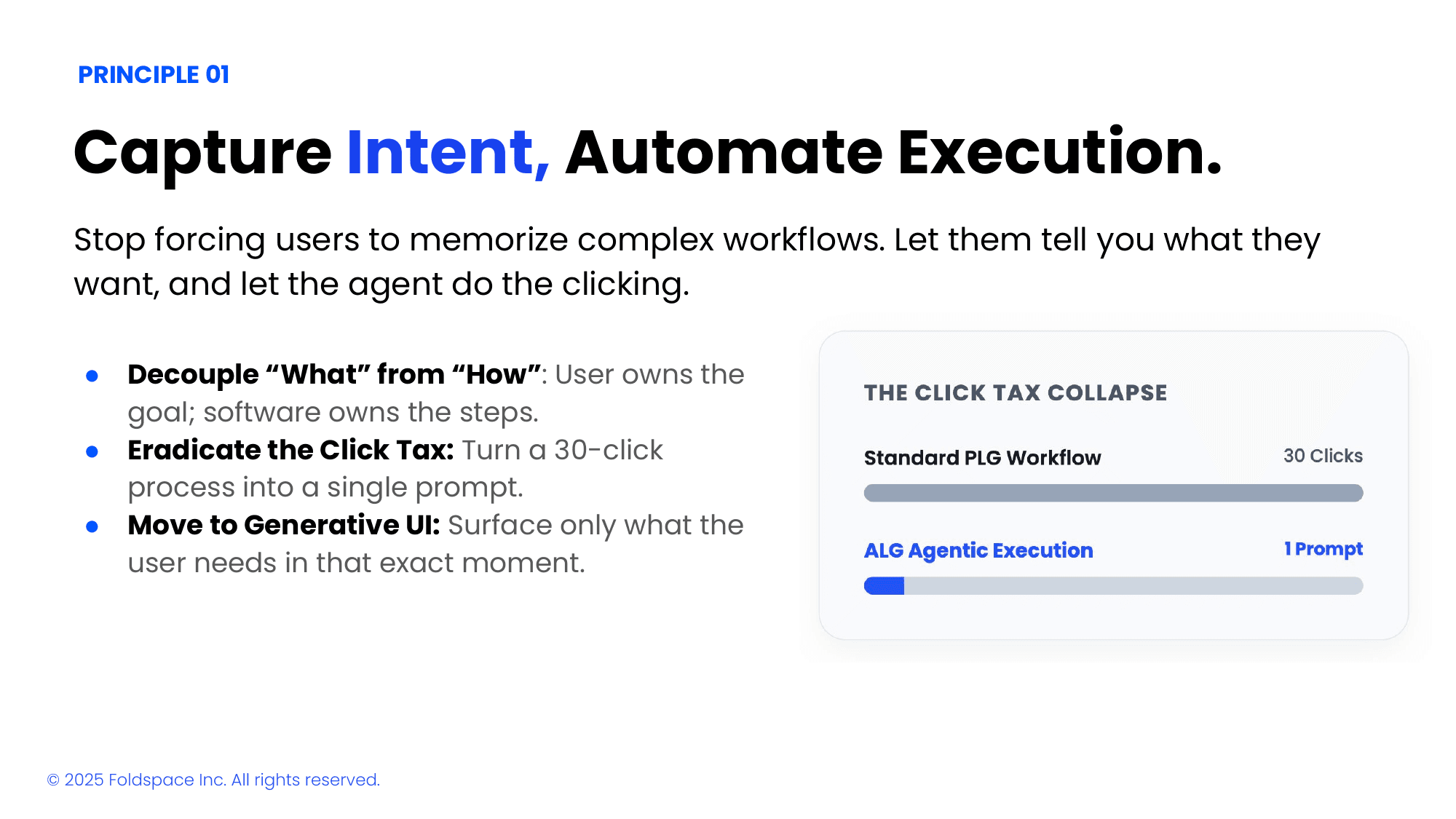
Principle 1: Capture Intent, Automate Execution
The first principle is about decoupling the what from the how. The user should own their goal; the product should own the steps to get there.
Mickey illustrates this with a comparison that says it all: a standard PLG workflow can take 30 clicks, while ALG agentic execution takes 1 prompt.
Instead of forcing a user to navigate five menus, apply three filters, and figure out which report to run — the agent takes the natural language intent ("show me why Q3 revenue dipped") and executes the relevant report autonomously.
The Click Tax Collapse in practice:
The traditional SaaS value path looks like this: Persona → Intent → Click Path → Empty Screen → Settings & Filters → Apply Best Practices → Visualize → (eventually) Outcomes. The Click Tax and Cognitive Load live between the intent and the outcome.
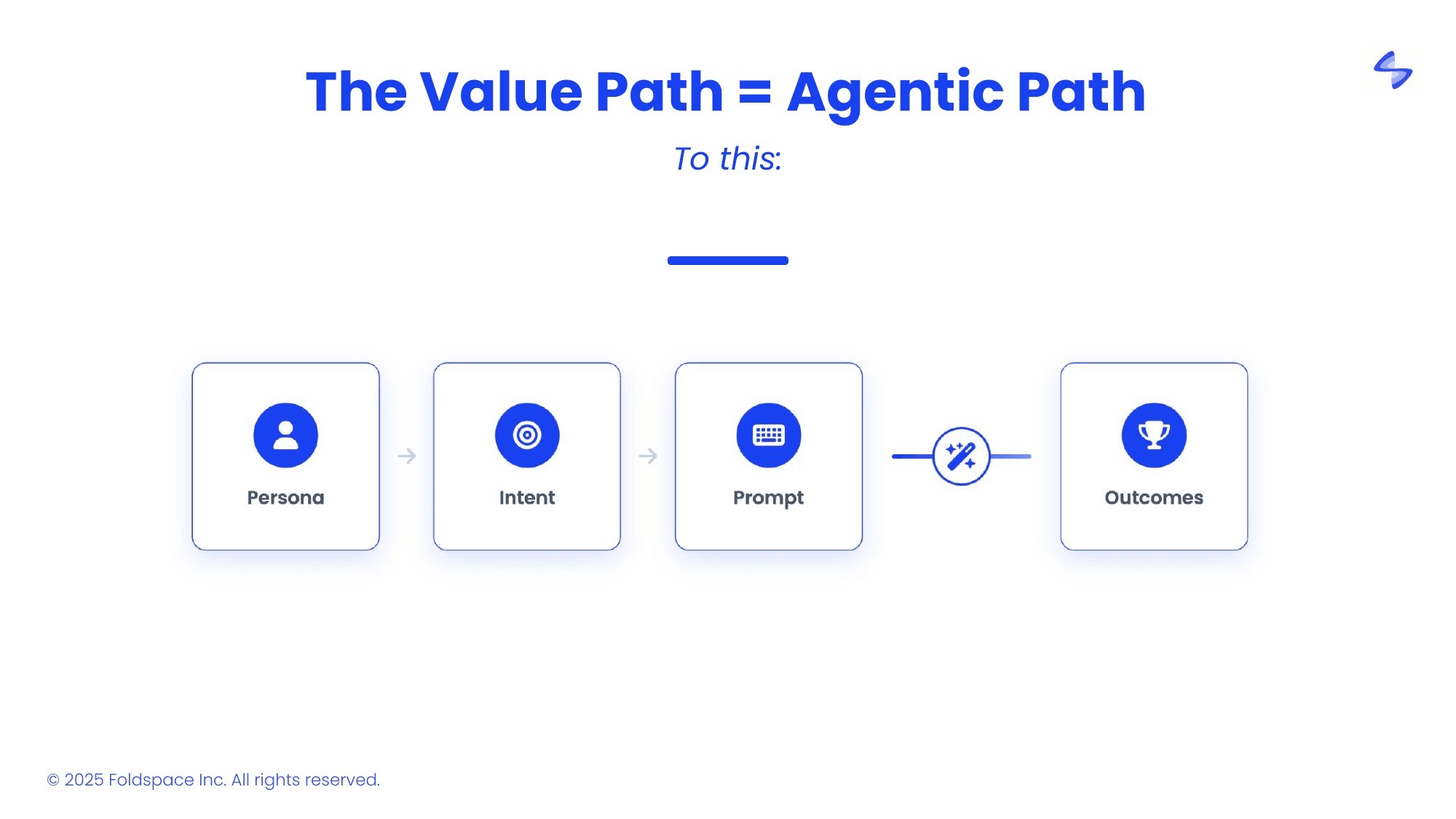
The agentic path collapses all of that: Persona → Intent → Prompt → Outcomes. A straight line.
Principle 2: Build Generative Experiences
The PLG era gave users a beautiful blank canvas and a library of templates. The problem: starting from zero is exhausting. Templates are never exactly right. The blank page is a drop-off point.
ALG flips this. Instead of making users build from scratch, the agent generates an 80% baseline immediately.
"You're not going to go in and see a finished result. You want to go for the 80% result... the last 20% to be fine-tuned by the user."
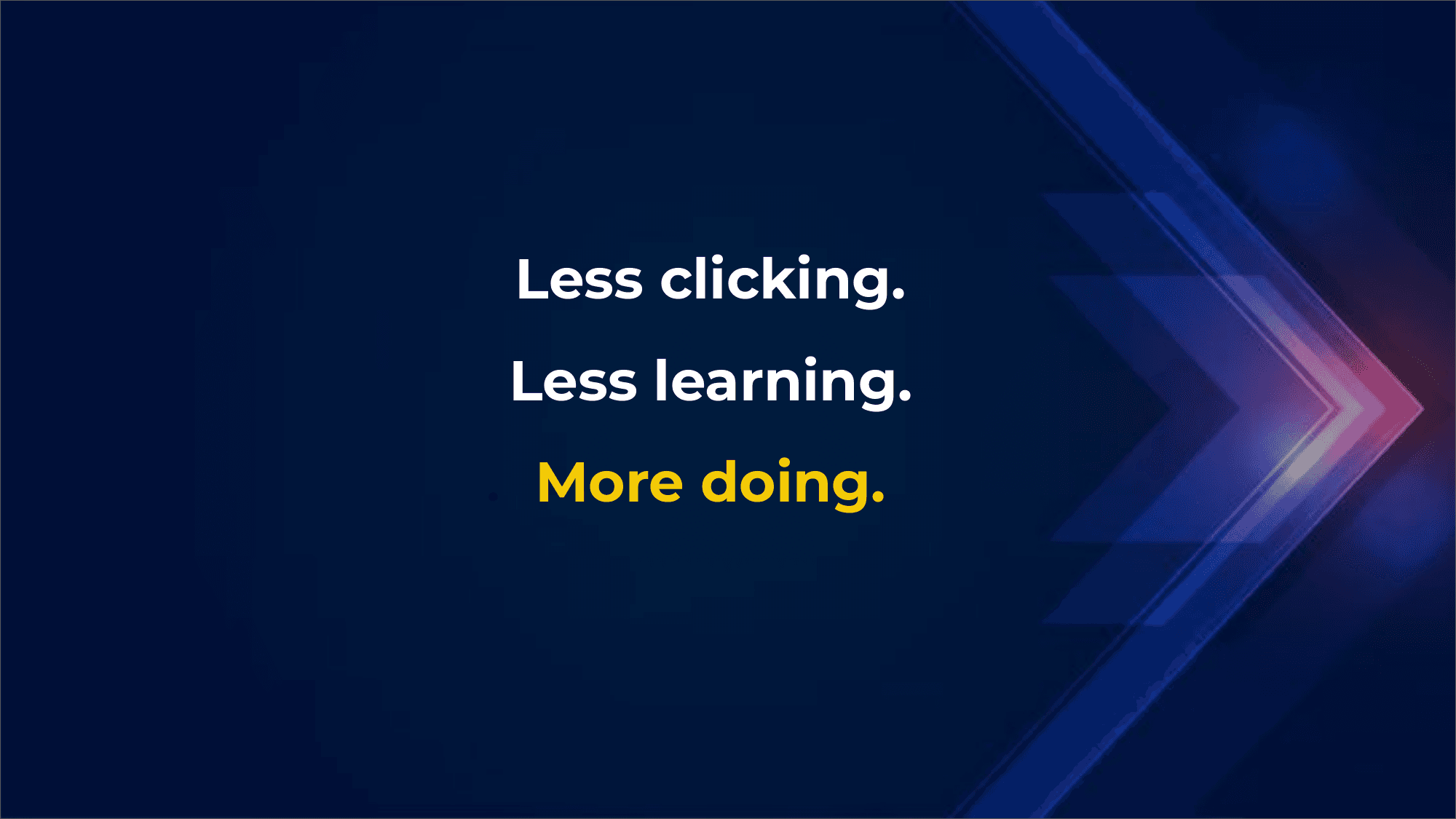
Less clicking. Less learning. More doing.
The agent collects persona and intent context early, then generates the first draft — a dashboard, a report, a slide deck — so the user arrives at immediate value and only needs to fine-tune. The role of the user shifts from builder to editor.
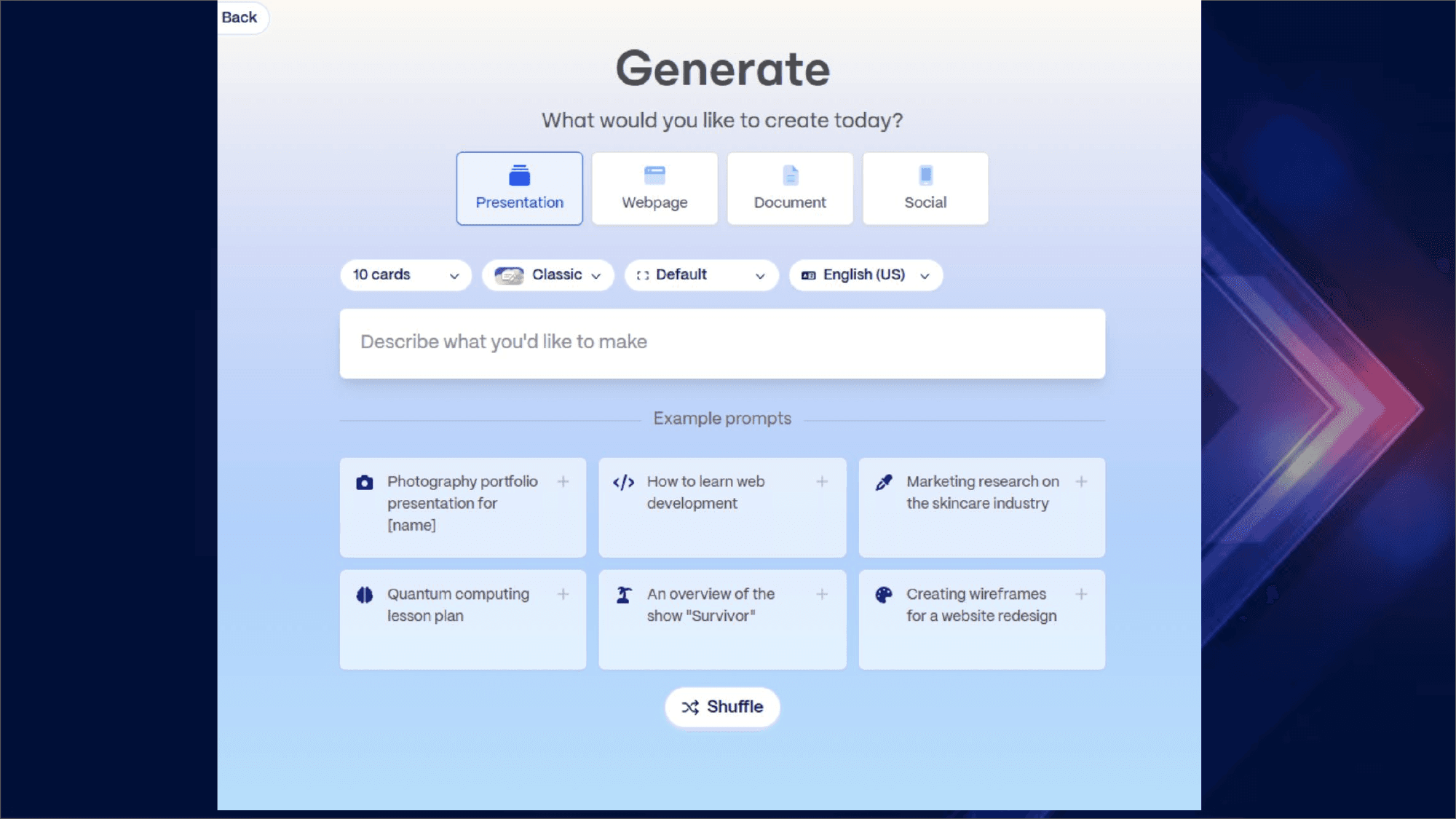
Mickey uses Gamma (the AI presentation tool) as an example. Rather than selecting a template, you describe what you want. Gamma generates the outline and structure. You edit the last 20%.
The agentic path walks the user through: Persona → Intent → Prompt → (AI handles the work) → Outcomes.
Principle 3: Embed Knowledge, Engineer Champions
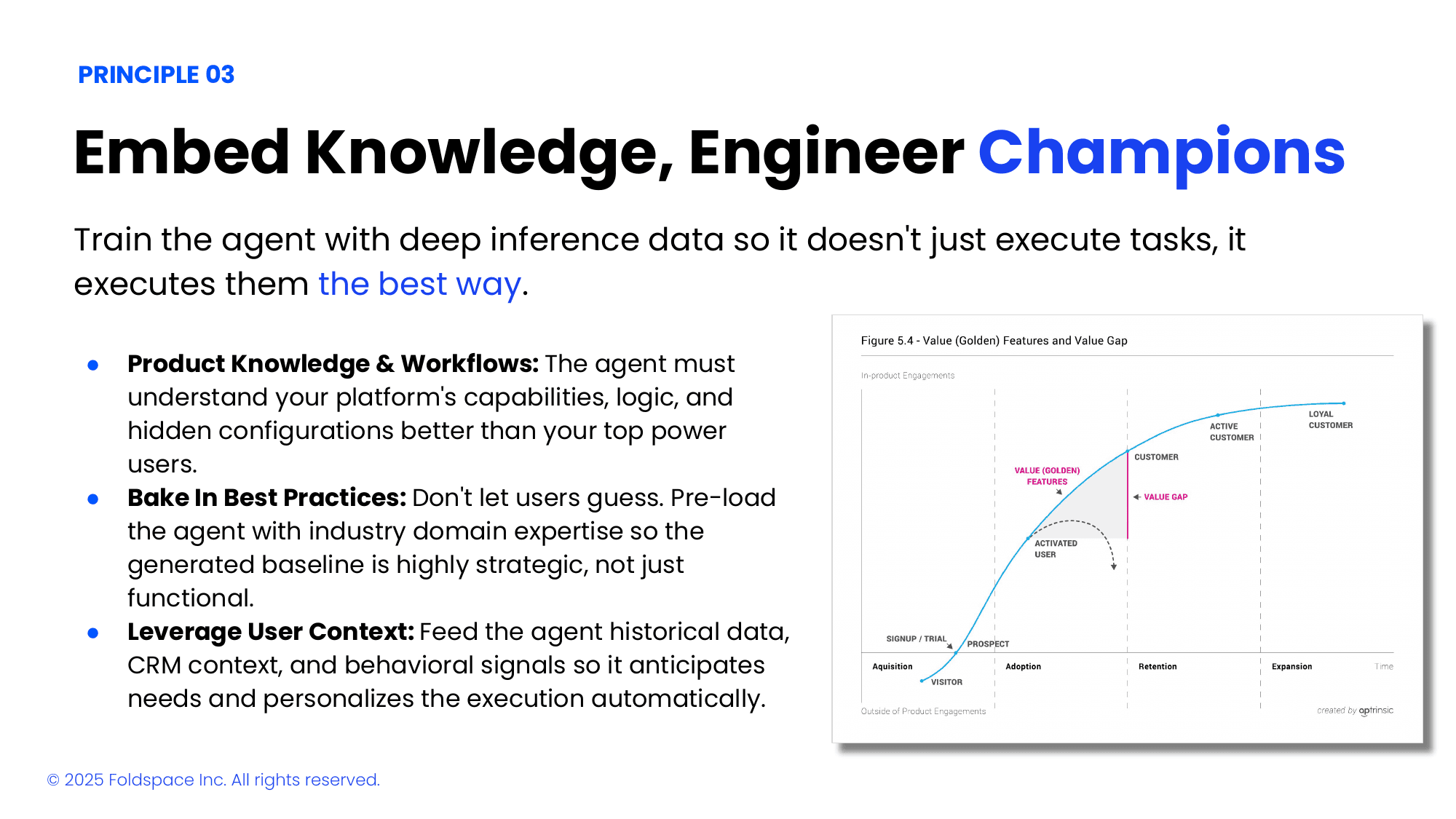
In the PLG era, there was a well-documented value gap: users see initial value, but they never become true champions or power users. Customer success teams spend enormous effort trying to close that gap through training, check-ins, and best practice guides.
ALG eliminates the value gap by baking knowledge directly into the agent:
- Product knowledge & workflows: The agent understands your platform's logic, hidden configurations, and advanced capabilities better than most users ever would
- Baked-in best practices: Pre-load the agent with industry expertise so generated baselines are strategic, not just functional
- User context: Feed the agent behavioral signals and CRM data so it anticipates what each user needs
When an agent generates the first version of something, it automatically incorporates the best practices a customer success rep would have taught. Feature discoverability — long a pain point in complex SaaS — is solved automatically. The agent uses advanced features the user didn't even know existed.
Principle 4: Mine Conversational Signals
Product teams have spent a decade living and dying by clicks, page views, and bounce rates. Sitting in rooms staring at heat maps, trying to deduce why users dropped off a specific page.
Conversational UI changes the game entirely:
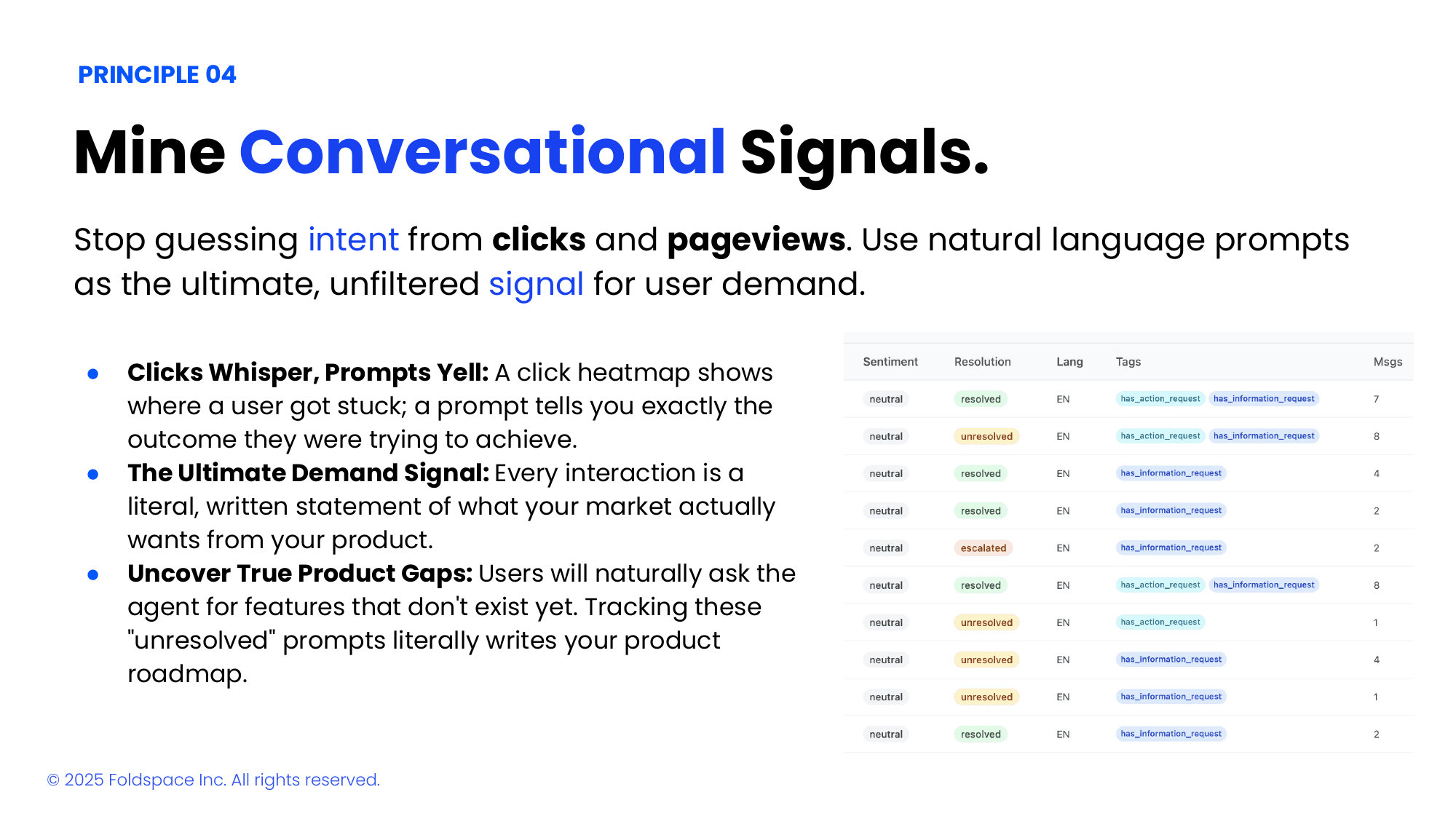
- Clicks whisper, prompts yell: A click heatmap shows where a user got stuck. A prompt tells you exactly what outcome they were trying to achieve.
- The ultimate demand signal: Every interaction is a literal, written statement of what your market wants from your product.
- Uncover true product gaps: Users will ask the agent to do things your product physically cannot do yet. Those "unresolved" prompts are your roadmap.
In the PLG era, frustrated users churned in silence. In the ALG era, the agent logs unresolved requests, frustration sentiment, and unmet outcomes — all feeding directly into prioritization.
"They tell you every day what they're trying to achieve."
Principle 5: Design Agentic UX
The biggest mistake Mickey sees in SaaS right now: bolting a basic text chat interface onto a legacy product and calling it AI.
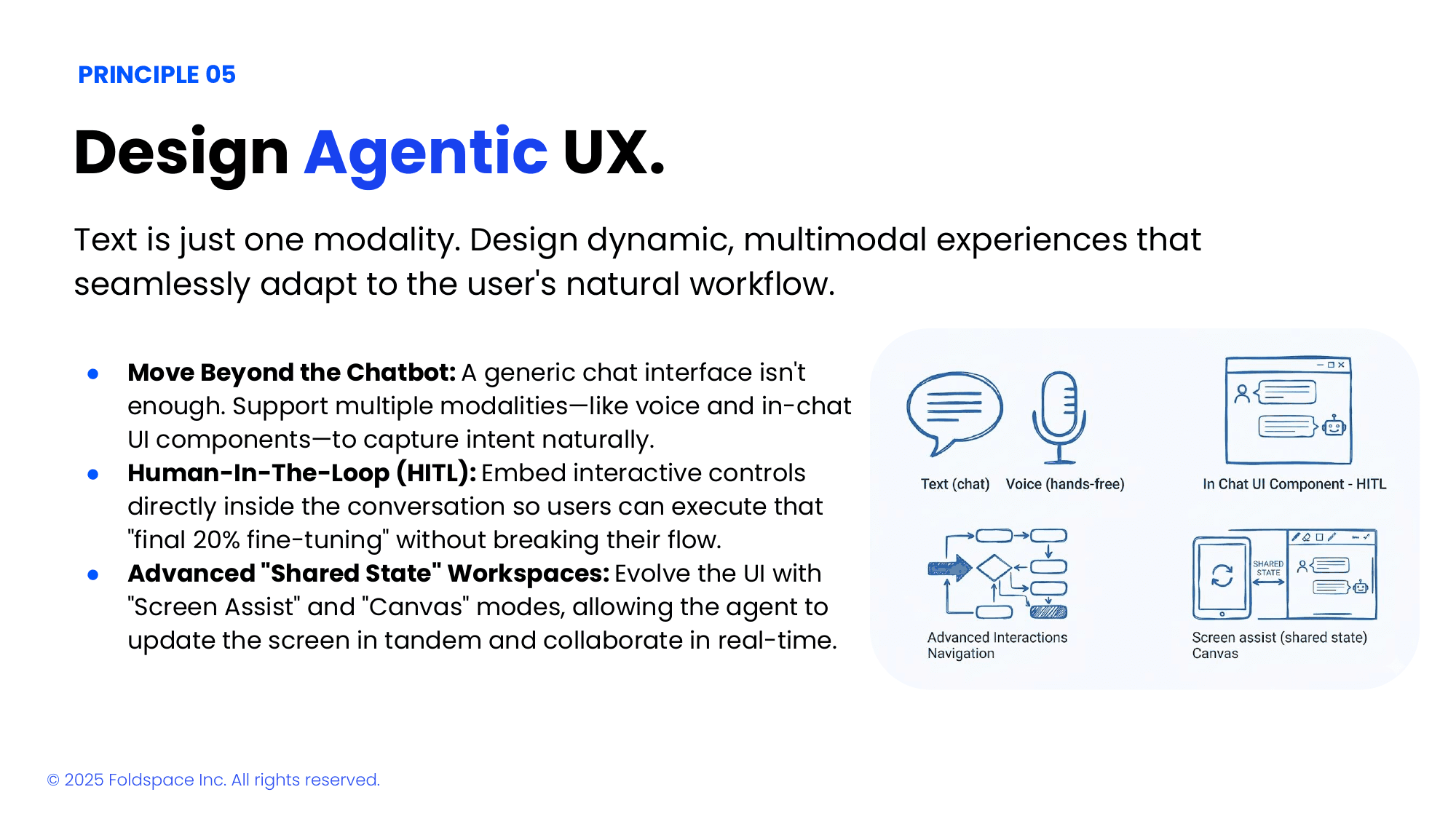
Text is just one modality. True ALG requires dynamic, multimodal experiences that adapt to the user's natural workflow:
- Move beyond the chatbot: Support voice, in-chat UI components, and contextual controls to capture intent naturally
- Human-In-The-Loop (HITL): Embed interactive controls directly in the conversation so users can execute that final 20% fine-tuning without breaking their flow
- Advanced "shared state" workspaces: Evolve toward "Screen Assist" and "Canvas" modes where the agent and user collaborate on the same screen in real time
Mickey also introduces the Composer pattern for prompt design: rather than expecting users to write detailed prompts, the agent asks a short sequence of contextual qualifying questions — "Are you optimizing for awareness or engagement?" — to build the full picture conversationally.
3 Key Takeaways
If you only remember three things from this session:
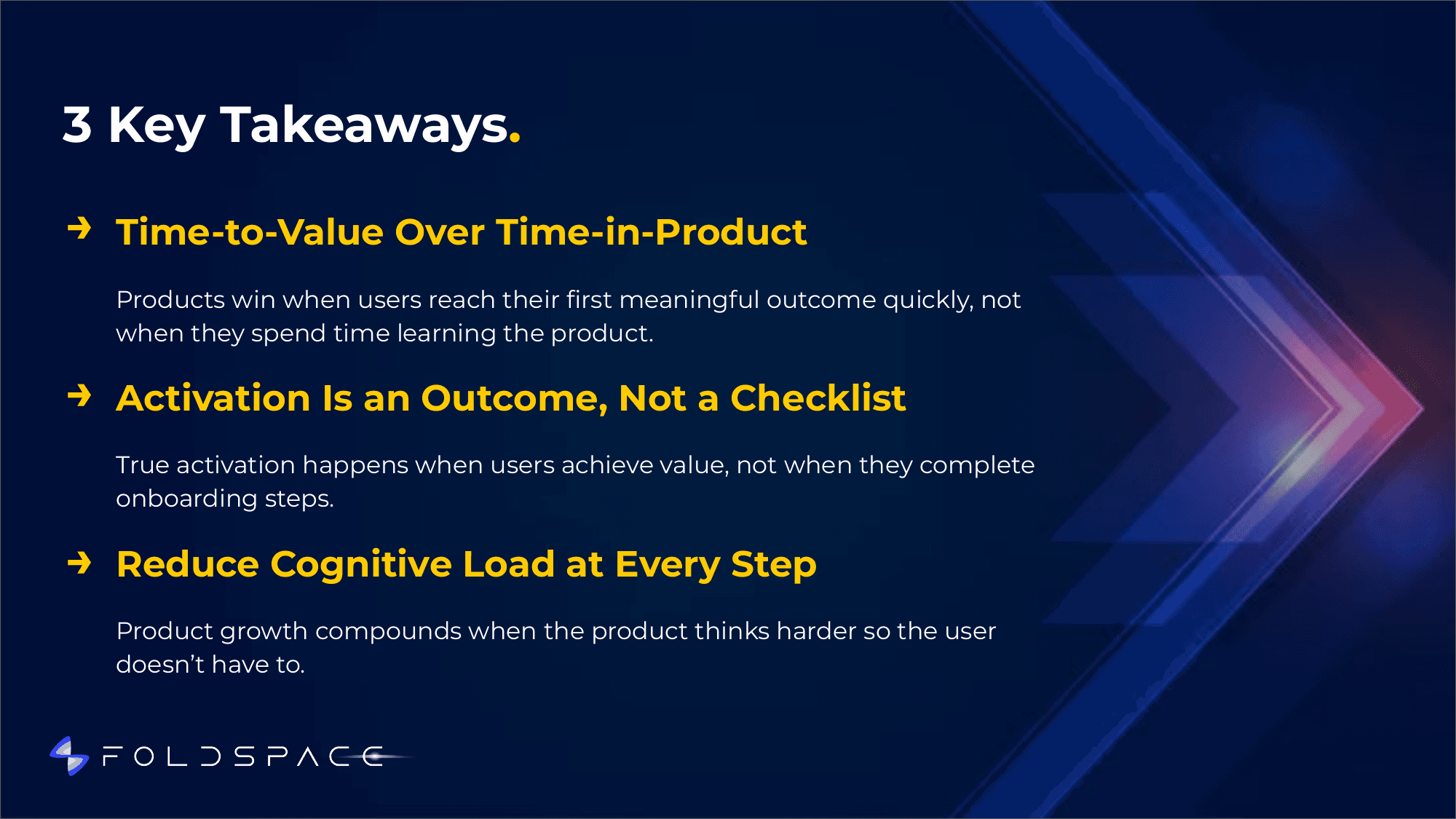
1. Time-to-Value Over Time-in-Product. Products win when users reach their first meaningful outcome quickly — not when they spend time learning the product. "Time in product" is potentially a bug, not a feature. You win by collapsing the Click Tax and getting users to their outcome instantly.
2. Activation Is an Outcome, Not a Checklist. Stop celebrating when a user clicks through 10 onboarding steps. True activation happens when the agent bridges the value gap and delivers a real result in the first session.
3. Reduce Cognitive Load at Every Step. Every step where a user might struggle is an opportunity to put an agent in. With good inference data, user context, and best practices, you can turn users into champions without them even realizing it — they just see great outcomes.
Tool: Measure Your Click Tax
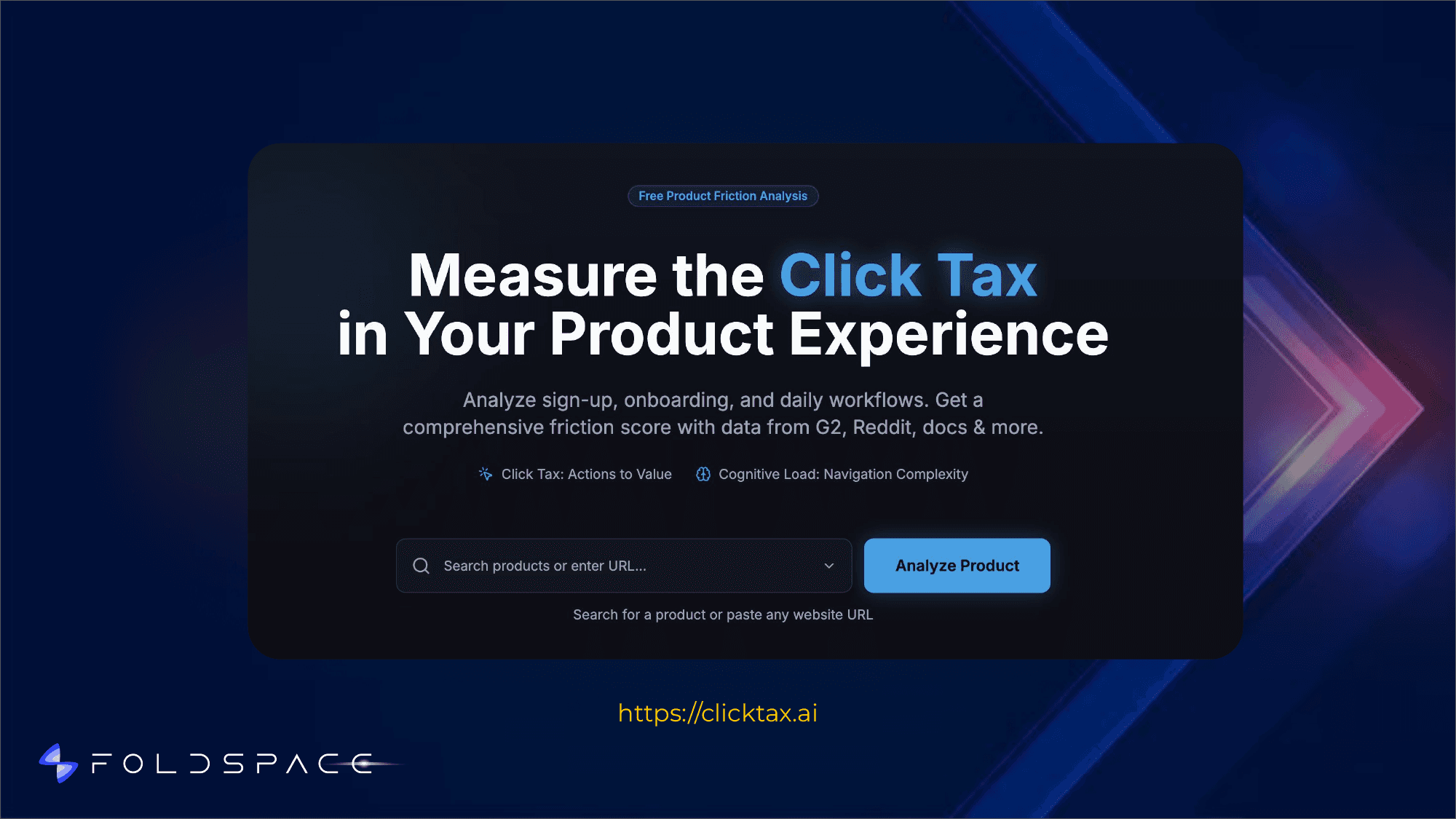
Mickey built a free tool specifically for this webinar: clicktax.ai
Enter any SaaS product URL and get a comprehensive friction score based on Click Tax (actions to value) and Cognitive Load (navigation complexity). Data is sourced from G2, Reddit, docs, and more. A fast way to benchmark your product — or a competitor's — against ALG principles.
Q&A Highlights
Q: Users struggle to write detailed prompts. How do you solve the blank page problem?
Context is everything. Always collect persona and intent during onboarding. Claude, for example, identifies your role and goals at signup, then pre-generates the first prompt for you to simply hit enter. In B2B SaaS you have even more leverage — the agent already knows the user's role, their usage history, and their current screen. They should never start from a blank page. If they do, your agent isn't getting enough context.
Q: Does the 20% fine-tuning become a "Q&A tax" — swapping click tax for prompt tax?
Not necessarily. The last 20% is often better served by clicks than prompts. If the agent built your dashboard, changing a date range is faster with two clicks than re-prompting. The generative experience handles the creation; traditional UI handles the fine-tuning. Map where in your product users need to generate things — that's your highest-value ALG opportunity.
Q: Will all products benefit from ALG?
Most will, but success depends on implementation. The key variables are context and inference data. Lack of context makes users frustrated — they end up in a support chat that asks leading questions instead of solving their problem. The winning products (Mickey cites Lovable as an example) invest in great inference data so the agent's first shot is highly accurate. The underlying model is the same across competitors; the differentiation is in the training data and context you give it.
The Shift in Summary
- User learns the product → the product learns the user
- Blank canvas + templates → the agent generates an 80% baseline
- Clicks, page views, heat maps → conversational signals and prompt analysis
- Churn in silence → the agent logs unresolved outcomes
- Time-in-product as the success metric → time-to-value as the success metric
- Activation = completed checklist → activation = delivered outcome